Cars · Resale guide
Maruti Suzuki Swift
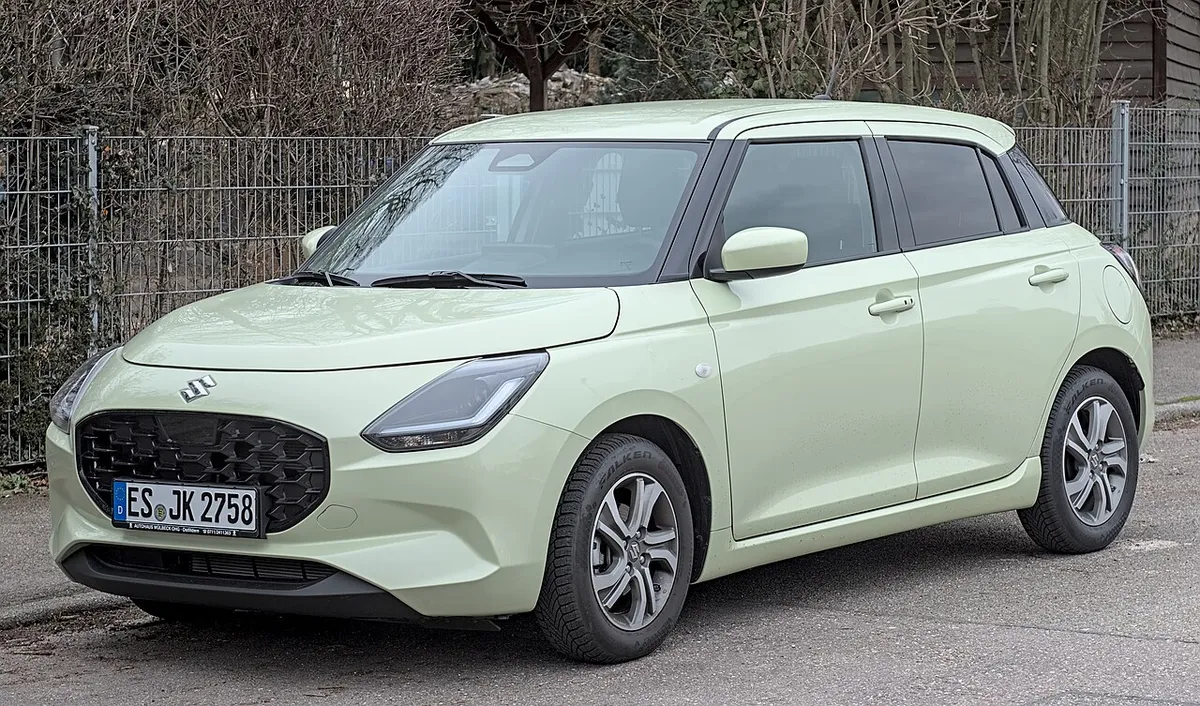
Fair price · India 2026
Prices checked 16 Aug 2026Range: ₹3,20,000 to ₹5,20,000 · depends on condition
Depreciation curve
5-year outlookThree ways to sell
Jaldi Bikega
Quick sell · 1–3 days
₹3,20,000
Sahi Daam · pick
Fair price · 5–10 days
₹4,55,000
Meri Marzi
Premium · 2–4 weeks
₹5,80,000
You paid new
₹9,00,000
Lost ₹4,45,000 (49%)
In gold
35.8g
@ ₹12,712/g (intl. rate)
Drops by
₹11,700
every month waiting
= Netflix for
3053 mo
(at ₹149/month)
Buying used? Check vehicle history first
Verify owner count, insurance, challan and blacklist on Parivahan
How Much Is a Used Maruti Suzuki Swift Worth in India?
A used Maruti Suzuki Swift is worth ₹3,20,000 to ₹5,80,000 in India in 2026, depending on its specific variant, overall condition, and kilometres driven. This range primarily reflects the popular petrol variants from around 2017-2019. Factors like a comprehensive service history, original paint, and fewer owners can push the value towards the higher end, while significant wear or accident history will pull it down.
Is the Maruti Suzuki Swift Still Worth It in 2026?
Absolutely, the Maruti Suzuki Swift remains a highly relevant and practical choice in 2026, especially for urban Indian buyers. The current generation, launched around 2017-2018, is now 8-9 years old, making it an affordable entry into the used car market. Its compact dimensions, peppy K-Series engine, and legendary fuel efficiency still make it a perfect city commuter.
Maruti Suzuki’s unparalleled service network across India means spare parts are readily available and affordable, and finding a skilled mechanic is never an issue. This translates to low ownership costs and peace of mind for buyers of a used car. While it might lack the very latest infotainment or advanced driver-assist systems found in brand-new vehicles, its core usability and reliability are unwavering.
Bottom line: If you need a dependable, economical, and easy-to-maintain city car with excellent after-sales support, the used Maruti Suzuki Swift is definitely still worth considering in 2026.
Maruti Suzuki Swift Price Guide
| Condition | Price Range | What It Means |
|---|---|---|
| Like New | ₹4,30,000 – ₹5,80,000 | Under 25,000 km, full authorized service history, original paint (no major dents/scratches), pristine interior, valid insurance. |
| Good | ₹3,90,000 – ₹5,20,000 | 25,000-50,000 km, regular service records, minor cosmetic wear (small scratches, light interior aging), possibly one or two repainted panels. |
| Fair | ₹3,20,000 – ₹4,50,000 | 50,000-80,000+ km, visible wear and tear (dents, scratches, interior fading), potential for minor mechanical attention needed, partial service history. |
Prices can also vary based on the specific variant — a ZXi or ZXi+ with an AGS (Auto Gear Shift) transmission will command a higher price than an LXi or VXi manual variant. Use the calculator below for a personalized estimate based on your exact specs.
Advantages — Why Buyers Pick the Maruti Suzuki Swift in 2026
Unmatched Service Network and Parts Availability Across India. Maruti Suzuki’s presence is truly nationwide. Whether you’re in a metro city or a tier-3 town, you’ll find an authorized service centre or a local mechanic familiar with the Swift. This means repairs are quick, parts are always in stock, and maintenance is hassle-free, a huge plus for a used car.
Exceptional Fuel Efficiency for City and Highway. The K-Series petrol engine in the Swift is renowned for its mileage. Owners consistently report 16-18 km/l in city conditions and often over 20 km/l on highways, especially in manual variants. With rising fuel costs, this makes the Swift a very economical choice for daily commuting.
Compact Dimensions and Agile Handling for Urban Driving. The Swift’s footprint is perfect for India’s crowded roads. It’s easy to maneuver through traffic, park in tight spots, and navigate narrow lanes. The light steering and responsive chassis make city driving enjoyable and less stressful.
Proven Reliability and Durability. Maruti Suzuki cars are built for the long haul. The Swift is known for its robust build quality and mechanical reliability, requiring minimal unscheduled repairs if maintained properly. Many owners report trouble-free ownership well beyond 1,00,000 km.
Strong Resale Value in the Used Market. Even as a used car, the Swift holds its value remarkably well. Its popularity and low running costs ensure there’s always a high demand from second-hand buyers. This means you won’t lose a significant chunk of your investment if you decide to sell it down the line.
Affordable and Accessible Maintenance Costs. Routine servicing and common wear-and-tear part replacements for the Swift are among the lowest in its segment. This makes it an ideal choice for budget-conscious owners who want predictable and manageable running expenses over years of ownership.
Disadvantages — Why You Might Skip the Maruti Suzuki Swift in 2026
Dated Feature Set Compared to Newer Alternatives. Being an 8-9 year old model, the Swift lacks many modern conveniences. You won’t find advanced infotainment systems with large touchscreens, wireless charging, connected car tech, or sophisticated driver-assist features that are common in newer vehicles. Consider if basic functionality is enough for your daily needs.
Average Safety Ratings for the Segment. While functional, the older generation Swift’s safety ratings might not be on par with the latest models that offer 6+ airbags, ESC, and more robust body structures. If cutting-edge safety features are a top priority, you might need to evaluate newer offerings from the brand.
Interior Quality and Rear Seat Space Can Feel Basic. The cabin plastics, while durable, are hard and can feel a bit utilitarian compared to more premium hatchbacks. Rear-seat legroom is adequate for two adults but can feel cramped for taller passengers on longer journeys. If you frequently carry adults in the back, this might be a concern.
Highway Stability at Higher Speeds is Not Its Strongest Suit. While nimble in the city, the Swift can feel a bit light or less planted on highways, especially when cruising at speeds above 100 kmph or encountering crosswinds. Drivers looking for a car with rock-solid highway manners might find it slightly lacking.
Noticeable Noise, Vibration, and Harshness (NVH) Levels. At higher engine RPMs or on rough roads, engine noise and road noise tend to intrude into the cabin. This can make longer drives a bit less refined compared to vehicles with better sound insulation.
Limited Boot Space for Family Trips. The Swift’s compact design means boot space is on the smaller side, typically around 268 litres. This is generally fine for daily errands or a weekend trip for two, but can be a squeeze for a family’s luggage on longer vacations, potentially requiring a roof carrier.
Factors That Affect Maruti Suzuki Swift Resale Value
Age and Kilometres Driven is the biggest determinant. A car that’s 8 years old with 40,000 km will fetch significantly more than a 6-year-old car with 1,00,000 km. Expect a depreciation of ₹20,000-40,000 per year and another ₹5,000-8,000 for every 10,000 km above the average (around 10,000-12,000 km/year).
Overall Condition (Exterior & Interior) matters immensely. A Swift with original, scratch-free paintwork and a spotless, well-maintained interior can add ₹15,000-25,000 to its value. Conversely, multiple dents, faded paint, or a stained interior can deduct ₹20,000-40,000.
Variant (LXi, VXi, ZXi, ZXi+ with AGS) plays a major role. Higher-end variants like the ZXi or ZXi+ with the AGS automatic transmission are always in higher demand and can command ₹30,000-60,000 more than the base LXi or mid-range VXi manual versions.
Comprehensive Service History and Records are crucial. A car with a full, documented service history from an authorized Maruti Suzuki service centre adds significant trust and can boost resale by ₹15,000-20,000. Missing or incomplete records can reduce the value by ₹25,000 or more.
Number of Owners impacts perception. A single-owner Swift will always be preferred and can fetch ₹10,000-20,000 higher than a multi-owner vehicle, as it suggests more consistent care.
Accident History severely devalues a car. Even minor accident repairs can reduce the value by ₹20,000-50,000, depending on the extent. Major structural damage or flood damage can slash the value by 50% or more, making it very hard to sell.
City of Registration can influence demand. Cars registered in metro cities like Delhi, Mumbai, or Bengaluru, where demand is high, might fetch slightly better prices compared to cars from smaller towns.
Colour also has a minor effect. Popular colours like white, silver, and grey tend to sell quicker and for a slightly better price (₹5,000-10,000) than less common or vibrant shades.
Maintenance Cost Breakdown (India, 2026)
Authorized Service Centre (genuine parts, full cost)
| Service | Cost | When Needed |
|---|---|---|
| Basic Service (Oil, Filter, Inspection) | ₹4,500 – ₹7,500 | Every 10,000 km or 1 year |
| Major Service (40,000 km) | ₹11,000 – ₹18,000 | Every 40,000 km (includes brakes, spark plugs, coolant, air/fuel filter) |
| Tyre Replacement (Set of 4) | ₹16,000 – ₹24,000 | Every 40,000-60,000 km |
| Clutch Plate Replacement (Manual) | ₹7,000 – ₹13,000 | Every 60,000-100,000 km (depends on driving style) |
| AC Gas Refill & Service | ₹2,000 – ₹4,000 | Every 2-3 years, or if cooling is weak |
| Battery Replacement | ₹5,000 – ₹9,500 | Every 3-5 years |
| Front Brake Pads Replacement | ₹2,500 – ₹4,000 | Every 20,000-30,000 km (depends on driving) |
| Suspension Overhaul (Major) | ₹18,000 – ₹30,000 | Every 80,000-1,00,000 km, or if ride quality degrades |
Third-Party Repair Shops (cheaper, with tradeoffs)
| Service | Cost | Tradeoff |
|---|---|---|
| Basic Service (Oil, Filter, Inspection) | ₹3,000 – ₹5,000 | Might use aftermarket oil/filters; expertise can vary. |
| Major Service (40,000 km) | ₹8,000 – ₹14,000 | Part quality might not be genuine; less advanced diagnostic tools. |
| Clutch Plate Replacement (Manual) | ₹5,500 – ₹10,000 | Aftermarket clutch might not last as long or feel as smooth. |
| AC Gas Refill & Service | ₹1,500 – ₹3,000 | Equipment may be basic; less rigorous leak detection. |
Annual running cost estimate: ₹15,000-25,000 budget for wear-and-tear at this age, plus one major repair likely in years 8-10.
Known Issues — Reported by Real Maruti Suzuki Swift Owners
Steering Rack Noise is a common complaint. Many owners on Team-BHP ownership threads and Reddit’s r/CarsIndia have reported a rattling or clunking noise from the steering rack, especially when driving over broken roads or speed breakers. This can be a costly repair, potentially ₹10,000-25,000 if replacement is needed.
Suspension Bushings Wear Out Prematurely. CarDekho user reviews and various YouTube long-term ownership videos often highlight that the front suspension lower arm bushings tend to wear out, leading to a noticeable ‘thud’ sound when going over bumps. Replacing these typically costs ₹3,000-7,000 per side, depending on the shop.
AC Compressor Issues After Several Years. While not universal, some owners, as noted in Autocar India road test archives and user forums, have reported AC compressor failure or a significant drop in cooling efficiency after 5-7 years of ownership. A compressor replacement can set you back ₹15,000-25,000.
Power Window Motor Failures are not uncommon. On CarWale and other owner forums, there are instances of power window motors becoming sluggish or failing entirely, particularly on the driver’s side due to frequent use. A replacement motor usually costs ₹2,000-4,000 per door.
Dashboard Rattles Can Develop Over Time. Some owners on Team-BHP and general user forums have noted minor rattles from the dashboard or door panels, especially on rough Indian roads. While mostly an annoyance rather than a mechanical fault, tracking down and fixing these can be time-consuming.
Brake Fading Under Hard Use. While the Swift’s brakes are adequate for city driving, some more spirited drivers or those who frequently drive on hilly terrains have reported a slight brake fade during aggressive or prolonged braking. This isn’t a defect but a characteristic of the car’s setup for its segment.
Warranty Status Timeline
| Period | Warranty Status |
|---|---|
| 2017 – 2019 | Manufacturer standard warranty (2 years / 40,000 km) — expired for all units by 2026. |
| 2019 – 2022 | Extended warranty (up to 5 years / 1,00,000 km) if purchased — expired or near-expired. |
| 2026 | No manufacturer warranty. All repairs out-of-pocket. |
| 2026 | Third-party insurance: Not worth it for mechanical breakdowns, only for accidental damage. |
For a car this old, third-party extended warranty plans from providers like Bajaj Allianz or Acko are generally not worth the premium for mechanical issues. They often have high deductibles and exclusions. Focus on comprehensive vehicle insurance for accidental damage instead.
Pre-Purchase Inspection Checklist
Essential Checks
- Check RC details on Parivahan app — Verify the owner’s name, vehicle registration date, and insurance status. Ensure there are no pending challans.
- Match Chassis and Engine Numbers — Find the chassis number (usually under the bonnet, on a doorframe sticker, or near the driver’s seat) and engine number, then cross-reference them with the RC book and Parivahan app.
- Inspect Odometer Reading & Authenticity — Compare the dashboard odometer with service records. If the kilometres are low but the brake/accelerator pedals or steering wheel are heavily worn, suspect tampering.
- Perform a Cold Start Test — Arrange to see the car when it hasn’t been driven for several hours. Listen for any difficulty starting, excessive smoke, or unusual engine noises.
- Examine All Four Tyres — Check for uneven wear, which can indicate alignment issues or past accident damage. Also, look for the manufacturing date code on the sidewall.
- Open the Bonnet and Inspect — Look for oil leaks around the engine, check the coolant level, assess the battery’s age, and inspect the condition of belts and hoses for cracks.
- Test the AC System Thoroughly — Turn the AC on max cooling for at least 5 minutes. Weak cooling, unusual noises, or a foul smell indicates potential compressor or gas issues (₹5,000-15,000 repair).
- Take a Comprehensive Test Drive — Drive for at least 15-20 minutes, testing acceleration, braking (listen for squeals), gear shifts (smoothness, clutch feel), and steering vibration at various speeds, including 80+ kmph.
- Verify All Electricals Work — Test power windows, central locking, ORVMs, headlights, tail lights, fog lamps, indicators, horn, music system, and any reverse camera/sensors.
- Check for Paint Mismatch and Panel Gaps — Walk around the car in good light, looking for variations in paint shade between panels or inconsistent gaps, which suggest accident repair.
- Inspect Undercarriage for Rust — Get a view of the car’s underside if possible, specifically checking wheel arches, floor pans, and exhaust for excessive rust, especially if from a coastal area.
- Confirm Duplicate Key Availability — A missing duplicate key is a red flag and getting a new one from the dealer can cost ₹5,000-10,000.
Insider Checks
THE BRAKE & ACCELERATOR PEDAL TEST (Odometer Fraud Detector): Look closely at the rubber pads on the brake and accelerator pedals. A genuine car with 30,000-50,000 km should still have clear grooves and texture. If the pedals are smooth, shiny, or worn flat, the car has almost certainly done significantly more kilometres than claimed—pedals typically lose grooves after 1 lakh km. If they look brand new on a 3-4 year old car, someone likely replaced them to hide real usage. Cost if missed: ₹50,000-1,00,000+ overpayment for a high-mileage car.
THE STEERING WHEEL WEAR TEST: Run your hands around the steering wheel, paying special attention to the 10 and 2 o’clock positions. These are the spots that wear first from daily grip. A genuinely low-kilometre car will have uniform texture all around. If 10 and 2 are noticeably smoother, shinier, or more worn than the 6 o’clock position, the car has been driven a LOT, regardless of what the odometer shows. Cost if missed: ₹50,000-1,00,000+ overpayment.
THE DOOR HINGE SAG TEST: Open each door about halfway and gently lift the outer edge upward. There should be almost no vertical play or sag. Saggy hinges indicate heavy use (thousands of open/close cycles) or that the door was removed during accident repair and not refitted correctly. If a passenger door sags more than the driver’s door, that specific door was likely replaced. Cost if missed: ₹2,000-5,000 per hinge for repair or replacement, plus potential accident history.
THE PAINT THICKNESS / FRIDGE MAGNET TEST: You can buy a cheap paint thickness gauge (₹500-1,000 on Amazon) or use a simple fridge magnet. Factory paint on a Maruti Suzuki Swift is typically 100-130 microns thick. Readings above 200 microns almost certainly mean the panel has been repainted, indicating accident damage. If you use a magnet, it will stick weaker or not at all to areas with thick body filler or multiple layers of paint. Pro tip: always check the ROOF. Nobody repaints the roof unless there was a serious accident or hail damage. Cost if missed: ₹10,000-50,000+ in undisclosed accident repair costs.
THE TYRE DATE CODE CHECK: Look at the sidewall of each tyre for a small, oval-shaped imprint containing a 4-digit number (e.g., “2523” means week 25 of 2023). If the car is from 2018 but the tyres are from 2015, either they were old stock or the car is older than claimed. If all four tyres have different date codes, it suggests multiple replacements over time, indicating high usage. Cost if missed: ₹16,000-24,000 for a new set of tyres, plus potential hidden age/usage.
THE OBD2 SCANNER TEST (₹800 investment saves lakhs): Invest in a basic Bluetooth OBD2 scanner (₹800-₹1,500 on Amazon/Flipkart). Plug it into the OBD port, usually located under the dashboard near the steering column. Use a free app like ‘Torque’ or ‘Car Scanner’. The Engine Control Unit (ECU) often stores the real odometer reading and any hidden error codes that might have been cleared from the dashboard. If the OBD reading doesn’t match the dashboard, it’s confirmed odometer fraud. Cost if missed: The price of the scanner is minimal, but detecting fraud can save you lakhs.
Common Scams to Watch For (India 2026)
Kms Rollback (Odometer Tampering): This is one of the most prevalent scams. Sellers manipulate the odometer to show a lower reading, making the car appear less used and more valuable. Always cross-check service history records, look for wear on pedals and steering wheel, and use an OBD2 scanner to verify the ECU’s stored mileage.
Curbstoning (Unlicensed Dealers Posing as Individuals): Unlicensed dealers often pose as “individual sellers” to avoid legal obligations, warranties, and GST. Be wary if a seller has multiple cars listed, uses professional photography, or seems overly eager to sell without disclosing much about their ownership. Always insist on meeting at their registered address.
Hidden Accident History via Cosmetic Repair: Sellers might cosmetically repair a damaged car to hide its accident history. Check for inconsistent panel gaps, paint thickness variations (use a magnet or gauge), and ensure all airbags have not been deployed and reset without proper replacement. The airbag warning light should not be on.
Flood-Damaged Cars: Cars affected by floods are often cleaned up and sold cheap, but develop severe electrical and mechanical issues months later. Check under carpets for water stains, look for rust on interior bolts and hinges, and smell for any lingering musty odour. Always be suspicious of unusually low prices for an otherwise good-looking car.
Fake Service Records: Some sellers forge service stamps or create fake digital records to show a full service history. Always cross-check the VIN and service dates with an authorized Maruti Suzuki service centre by calling them directly. Gaps in service records or sudden changes in service location are red flags.
Chassis or Engine Number Tampering: This is a serious crime, often indicating a stolen vehicle or one restored from scrap. Always verify that the chassis number (on the car and RC) and engine number match the Parivahan app records. Any signs of grinding, re-stamping, or welding around these numbers are critical red flags.
Pending Loan / Hypothecation on RC: A car might still have an outstanding loan against it, even if the seller claims otherwise. Always verify the RC (Registration Certificate) explicitly states “No Hypothecation.” If there’s a bank’s name mentioned, ensure the seller provides an NOC (No Objection Certificate) from the bank before payment.
Duplicate Registration (RC) Fraud: While rare, some fraudsters attempt to sell a car using a duplicate registration certificate while the original is held elsewhere or the car is stolen. Always insist on handling the RTO transfer yourself, and never rely solely on a seller’s middleman for paperwork.
Seller’s Guide — How to Maximize Your Maruti Suzuki Swift Resale
Physical Preparation
- Get a Fresh Service Done: A recent service stamp in your booklet (within the last 3-6 months) can add ₹15,000-25,000 to your asking price. Buyers see this as a car ready to drive.
- Renew Pollution Under Control (PUC) Certificate: An up-to-date PUC is mandatory and shows you’re a responsible owner. It’s a small cost that avoids buyer hesitation.
- Ensure Insurance is Active: Buyers prefer a car with active insurance, making the transfer process smoother.
- Fix Minor Dents and Scratches: Spend ₹2,000-5,000 at a local denter for small dings and scratches. This can easily add ₹10,000-15,000 to your car’s perceived value and prevent lowball offers.
- Clean Interior Thoroughly: A professionally cleaned interior (shampooed seats, detailed dashboard, clean floor mats) makes a huge difference. Remove all personal items. This can add ₹5,000-10,000.
- Check and Top Up All Fluids: Ensure coolant, brake fluid, engine oil, and washer fluid are at appropriate levels. It shows attention to detail.
- Verify All Electricals Work: Make sure the AC cools effectively, all power windows operate smoothly, the music system works, and all lights (headlights, tail lights, indicators) are functional.
Documentation
- Gather All Original Documents: Have your RC (Registration Certificate), active insurance policy, PUC certificate, original purchase invoice, and complete service history records ready.
- Duplicate Key is a Must: A missing duplicate key can reduce your car’s value by ₹5,000-10,000. Ensure you have both keys.
- NOC (No Objection Certificate) if Applicable: If you had a loan on the car, ensure you have the NOC from the bank stating the loan is cleared.
Listing Photography
- Shoot in Daylight: Always take photos in bright natural light, avoiding harsh shadows.
- Capture All Angles: Get clear shots of the exterior from all four corners, front, back, and sides.
- Highlight the Interior: Photograph the dashboard, front and rear seats, boot space, and the odometer reading.
- Engine Bay Shot: A clean engine bay photo instills confidence.
- Document Condition: If there are minor flaws you’re transparent about, photograph them clearly.
Platform Choice
For maximizing your Maruti Suzuki Swift’s resale value, consider listing it on Bids44.com. It’s a bidding marketplace where multiple verified buyers compete, often driving up the price for well-maintained cars. You can also list on platforms like OLX for direct buyers or explore dealer buy-back options with Spinny or Cars24 for a quicker, hassle-free sale, though usually at a slightly lower price.
Final Verdict — Should You Buy or Sell in 2026?
For Buyers: The Maruti Suzuki Swift remains an excellent choice for first-time car owners, city dwellers, or anyone on a budget looking for reliable, economical transport. Aim for a well-maintained VXi or ZXi variant from 2018-2019 with under 60,000 km and a full service history. Expect to pay in the ₹4,00,000-₹5,50,000 range for a good condition model. If your budget stretches higher and you prioritize modern features and safety, consider a newer Maruti Suzuki Baleno or Ignis within the brand’s lineup—they offer a more contemporary experience without sacrificing the core Maruti Suzuki advantages.
For Sellers: Your Maruti Suzuki Swift still commands strong demand in the used market. For a well-maintained 2018-2019 model, you can realistically list it between ₹4,20,000 and ₹5,80,000, depending on variant and condition, but be prepared for negotiation to a floor of around ₹3,80,000-₹4,50,000. Selling privately will generally yield a better price than a dealer exchange. For competitive offers and a streamlined selling process, consider listing your Maruti Suzuki Swift on Bids44.com.
Personalized estimate
Check your Maruti Suzuki value
Ten seconds. No signup.

Analyzing your item...
On Bids44, buyers compete for your item — so you always get the best price
Powered by Bids44 AI Fun fact
Your item is worth — grams of gold at today's rate
Gold rate: ~₹9,500/gram (Mar 2026). Every month you wait, your item loses value while gold goes up.
Happy with the price?
List on Bids44. Buyers compete. You pick the winner.
Ready to sell your Maruti Suzuki?
Bids44 is India's bidding marketplace. Buyers compete. You get the best price — not the first offer.
List on Bids44Frequently Asked Questions
How much is a used Maruti Suzuki Swift worth in India in 2026?
When is the best time to sell my Maruti Suzuki Swift?
Should I service my Maruti Suzuki Swift before selling?
How do I prove my Maruti Suzuki Swift kms reading hasn't been rolled back?
How do I check if my Maruti Suzuki Swift has a clean title?
Petrol or diesel Maruti Suzuki Swift: which holds value better in 2026?
More like this
Related Cars guides

Audi A4
6-yr depreciation
Tata Curvv EV
6-yr depreciation
Maruti Suzuki Ritz
6-yr depreciation
Skoda Slavia
6-yr depreciation
Maruti Suzuki Jimny
6-yr depreciation
Mercedes-Benz C-Class
6-yr depreciation
Also read