Cars · Resale guide
Honda WR-V
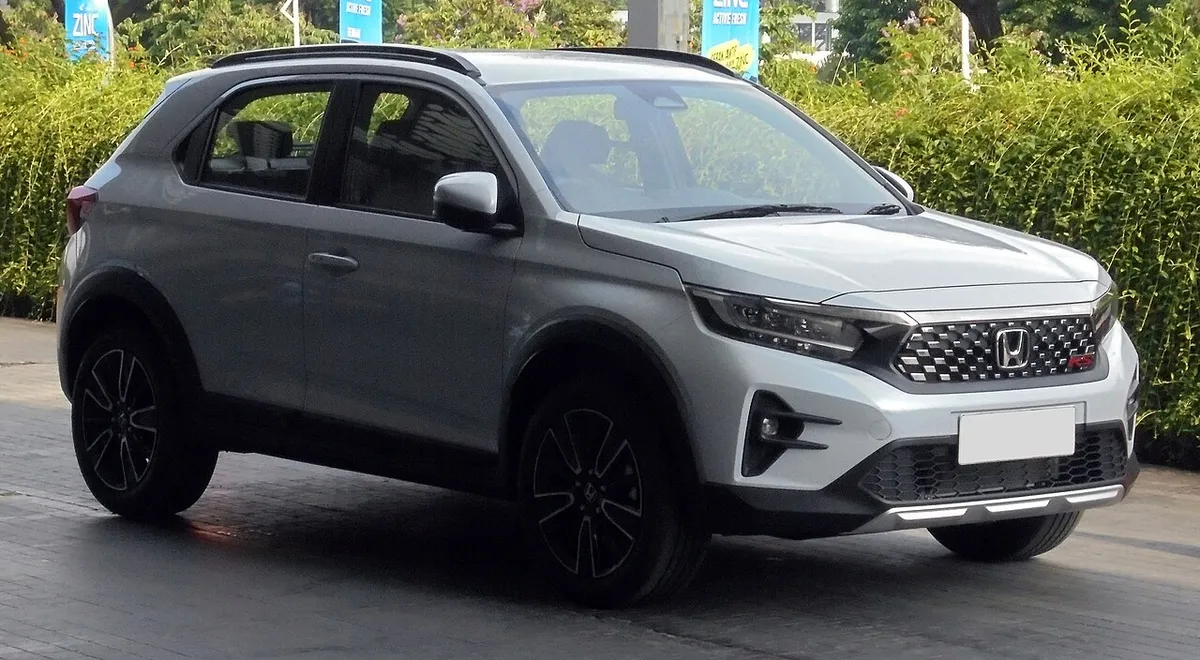
Fair price · India 2026
Prices checked 16 Aug 2026Range: ₹3,50,000 to ₹7,00,000 · depends on condition
Depreciation curve
5-year outlookThree ways to sell
Jaldi Bikega
Quick sell · 1–3 days
₹3,50,000
Sahi Daam · pick
Fair price · 5–10 days
₹6,25,000
Meri Marzi
Premium · 2–4 weeks
₹9,00,000
You paid new
₹12,00,000
Lost ₹5,75,000 (48%)
In gold
49.2g
@ ₹12,712/g (intl. rate)
Drops by
₹14,900
every month waiting
= Netflix for
4194 mo
(at ₹149/month)
Buying used? Check vehicle history first
Verify owner count, insurance, challan and blacklist on Parivahan
How Much Is a Used Honda WR-V Worth in India?
A used Honda WR-V is worth ₹3,50,000 to ₹9,00,000 in India in 2026, depending on manufacturing year (2017–2023 production run), variant (S/V/VX), engine type (1.2 petrol, 1.5 petrol, or 1.5 i-DTEC diesel), and overall condition. A well-maintained 2021–2023 VX petrol CVT in excellent shape with full service history commands the upper range; older 2017–2018 diesel units with high mileage fall toward the lower end. The Honda WR-V was discontinued in India in 2023, making clean late-model units increasingly sought after.
Is the Honda WR-V Still Worth It in 2026?
The Honda WR-V occupied a unique position in India’s sub-4-metre crossover segment between 2017 and 2023 — it offered crossover styling and ground clearance on the Jazz platform, making it more car-like to drive than the Brezza or Venue while maintaining Honda’s characteristically smooth petrol engines. Honda India discontinued it in 2023 without a direct replacement (the Elevate sits in a higher segment), making the used market the only source for buyers who specifically want a WR-V.
In 2026, the WR-V’s strongest selling point is the 1.5-litre i-VTEC petrol engine (introduced with a refresh in 2020) — smooth, refined, and considerably better to live with in city traffic than the older 1.2L variant. The diesel WR-V (1.5 i-DTEC) is best avoided in 2026 unless you can verify DPF (diesel particulate filter) health, as ageing diesel particulate systems in city-use cars have become a significant maintenance cost for owners.
For buyers seeking a Honda-engineered sub-compact crossover with more car-like dynamics than its SUV-positioned competitors, a well-maintained petrol WR-V remains a sensible used buy in 2026.
Honda WR-V Price Guide
| Condition | Price Range | What It Means |
|---|---|---|
| Like New | ₹7,00,000 – ₹9,00,000 | 2021–2023 unit, under 30,000 km, complete Honda service history, no accident history, petrol preferred. |
| Good | ₹5,50,000 – ₹7,00,000 | 2018–2021 unit, 30,000–60,000 km, minor wear on interiors and body, documented service history. |
| Fair | ₹3,50,000 – ₹5,50,000 | 2017–2019 unit or high-mileage post-2019, 70,000+ km, noticeable wear, needs service attention, diesel variants in this range require extra caution. |
The 1.5L petrol (introduced 2020) commands ₹50,000–₹80,000 premium over older 1.2L petrol units. Diesel variants in good condition command a slight premium over petrols at earlier years but are heavily discounted at older ages due to DPF maintenance anxiety.
Advantages — Why Buyers Pick the Honda WR-V in 2026
Honda’s Renowned Petrol Engine Refinement. The 1.5-litre i-VTEC DOHC engine is one of Honda India’s best powertrain choices — linear power delivery, a willingness to rev, and notable refinement at highway cruising speeds. Honda petrol engines in India are known for their long-term durability, and long-term WR-V owners confirm this reputation.
Genuinely Car-Like Dynamics. Built on the Jazz platform, the WR-V drives more like a hatchback than an SUV. The steering is precise, body roll is minimal compared to competitors, and the ride quality at speed is composed. This makes the WR-V the pick for buyers who prioritise the driving experience over the SUV command position.
Generous Ground Clearance. Honda raised the WR-V’s ride height to 188mm — higher than the Jazz — making it genuinely capable on bad urban roads and manageable on rough terrain. This crossover spec means buyers get Sub-4m SUV capability without the floaty handling common to true SUVs.
Practical Cabin and Boot. The WR-V has a surprisingly spacious interior for a sub-4m car, with rear passengers getting adequate knee room. The 363-litre boot is competitive in the segment. The VX variant comes with a 7-inch infotainment screen, reverse camera, Android Auto/Apple CarPlay, and cruise control.
Honda Dealer Network. Honda India has approximately 350 dealerships and 1,000+ service points. While this is less dense than Maruti or Hyundai, Honda service is available in most cities and is generally reliable for maintaining the WR-V’s powertrain health.
Disadvantages — Why You Might Skip the Honda WR-V in 2026
Discontinued Model — No Factory Continuity. Since Honda discontinued the WR-V in India in 2023, there is no factory production for new parts specific to the WR-V’s unique body panels, infotainment hardware, and some trim components. Engine and drivetrain parts continue to be available (shared with City and Jazz), but bodily unique items will become harder to source over time.
Rear Seat Headroom Is Limited. While legroom is decent, the WR-V’s sloping roofline means taller passengers (above 175cm) find the rear headroom cramped, particularly in the middle seat. This is one of the segment’s consistent criticisms.
Infotainment System Has Aged Poorly. The WR-V’s DigiPad touchscreen system (pre-2020 variants) is slow and runs on dated hardware. The 2020+ refresh with a DigiPad 2.0 is better but still behind competitors in responsiveness and feature set by 2026 standards.
Limited Variant for Automatic Transmission. The automatic (CVT) gearbox was only available on the 1.5L petrol VX variant. Buyers wanting an automatic on lower trims had no option in the WR-V.
Poor AC Performance in Peak Summer. A frequently cited owner complaint — the WR-V’s air conditioning system struggles to cool the cabin quickly in extreme 40°C+ summer temperatures, particularly in rear seats. Compared to the Venue or Brezza, which have stronger cooling systems, the WR-V’s AC requires more time to bring down cabin temperature.
Factors That Affect Honda WR-V Resale Value
Manufacturing year is critical. The 2020 refresh introduced the 1.5L engine and improved features — post-2020 units command ₹80,000–₹1,20,000 premium over pre-refresh units in equivalent condition.
Petrol vs. Diesel. Petrol WR-Vs now command higher resale prices in India due to diesel maintenance anxiety. This was not always the case — diesel premiums have reversed over the past 4–5 years.
VX variant premium. The top VX variant with all features added commands ₹40,000–₹70,000 over the V variant in equivalent mileage and condition.
Accident history. As with all Hondas, accident history significantly impacts resale. Use CarInfo or VehicleInfo apps to verify insurance claims. A structural repair on the WR-V should drop asking price by ₹75,000–₹1,50,000.
Service history at Honda. A full Honda-stamped service book adds ₹30,000–₹50,000 in confidence and asking price for a used WR-V versus one with no documented history.
Maintenance Cost Breakdown (India, 2026)
Honda Authorized Service Centre
| Service | Cost | Frequency |
|---|---|---|
| Regular Service (oil, filter, multi-point check) | ₹4,000 – ₹7,500 | Every 10,000 km or 12 months |
| Engine Oil (Honda Genuine 0W20) | ₹2,500 – ₹3,500 | Every 10,000 km |
| Brake Pads (front) | ₹2,500 – ₹5,000 | Every 30,000–50,000 km |
| Tyres (set of 4, 195/60/R16) | ₹18,000 – ₹28,000 | Every 40,000–60,000 km |
| Air Filter Replacement | ₹800 – ₹1,500 | Every 20,000 km |
| AC Filter (cabin filter) | ₹600 – ₹1,200 | Every 20,000 km |
| CVT Fluid Change | ₹3,500 – ₹6,000 | Every 40,000 km (CVT variant) |
| DPF Service (diesel only) | ₹5,000 – ₹15,000 | Varies; dependent on driving pattern |
Annual running cost for petrol models: Budget ₹12,000–₹22,000 per year for routine maintenance. Diesel models add ₹5,000–₹15,000 potential DPF-related costs.
Known Issues — Reported by Real Honda WR-V Owners
Suspension Bottoming Out Under Two-Up Load. This is the most consistently reported owner complaint across Honda WR-V owner groups on Facebook and the Team-BHP WR-V review thread. The soft suspension setup that makes the car comfortable solo becomes noticeably inadequate when carrying a pillion and cargo over Indian speed breakers. The rear suspension in particular bottoms out on higher speed breakers with two adults aboard. Aftermarket suspension upgrades or a visit to an authorized Honda workshop for shock absorber inspection helps.
Infotainment Lag and Map Freeze (Pre-2020 Units). The DigiPad infotainment system in 2017–2019 WR-Vs was prone to laggy response, occasional freeze, and the navigation (where fitted) could lose GPS lock intermittently. Honda issued software updates for some of these issues but pre-2020 units remain a concern for buyers who rely heavily on in-car infotainment.
AC System Delays Cooling (All Variants). Widely reported on Indian owner forums — the WR-V’s AC system takes 5–8 minutes to meaningfully cool the cabin from a hot soak, longer than competitors. This is partly a design trade-off and not a defect, but used buyers should know they’re accepting a slower-cooling AC. The dealer-level AC performance calibration check can verify compressor and condenser health.
DPF Clogging on Diesel Variants in City Use. Honda WR-V i-DTEC diesel owners who predominantly drive in city conditions (under 30 km/day, mostly stop-and-go) reported DPF clogging appearing from 60,000–80,000 km onwards. The DPF requires periodic high-speed driving (30–40 minutes at 80+ km/h) to self-regenerate. City drivers who never do highway runs eventually need forced DPF regeneration at a Honda workshop (₹3,000–₹6,000) or in extreme cases, DPF replacement (₹40,000–₹80,000).
Steering Pull After Wheel Alignment at Independent Workshops. Multiple WR-V owners noted that wheel alignments done at non-Honda workshops often resulted in the car pulling slightly to one side on highways. The WR-V’s steering geometry is precise and benefits from calibration at Honda-authorized workshops using proper Honda alignment specs. Misaligned steering also causes uneven tyre wear.
Rear Armrest Rattle. A minor but frequently mentioned quality issue — the rear centre armrest develops a rattle noise over time due to the plastic securing clips loosening. It is a ₹0 fix (re-clip or use adhesive tape) but is consistently noted in owner reports from 30,000+ km units, suggesting a design tolerance issue.
Warranty Status Timeline
| Period | Warranty Status |
|---|---|
| 2017–2025 (original purchase range) | Honda 3-year/unlimited km warranty from purchase date |
| 2020–2023 | Extended warranty up to 5 years available through Honda |
| 2026 | 2017–2021 units: out of factory warranty |
| 2026 | 2022–2023 units: may still be within warranty; verify with Honda dealer using VIN |
Pre-Purchase Inspection Checklist
Essential Checks
- Bounce the rear suspension firmly with the car parked — sit in the rear seat and test the feel on known speed breakers before finalising; this is the #1 reported weakness.
- Request a Honda diagnostic scan using Honda’s HIM (Honda Interface Module) or equivalent OBD-II tool — check for stored fault codes in the engine, transmission, and ABS modules.
- Test the CVT (if automatic) — in a parking lot, alternately accelerate and brake repeatedly. The CVT should engage smoothly with no jerk, hesitation, or shudder between 0–30 km/h.
- Verify DPF status (diesel variants) — ask the previous owner about highway driving frequency. If they were predominantly a city driver, factor in a DPF service immediately.
- Test the air conditioning at maximum — after 3 minutes at max cooling with doors shut, the centre vent should blow at below 10°C. Use a cheap thermometer if possible.
- Inspect all four tyres for uneven wear — diagonal wear on the front tyres suggests persistent alignment or suspension geometry issues.
- Check accident history via CarInfo — run the registration number through an accident/insurance claim database check.
- Open every door, the bonnet, and the boot — check for paint overspray on door jambs, body seams, or the bonnet’s inner lip, which indicates panel work after an accident.
- Test all electrical systems — power windows, sunroof (if present), automatic headlights, and the infotainment system with Android Auto/Apple CarPlay pairing.
- Drive at 100 km/h on a highway stretch — the car should track straight without pulling; steering should feel stable and the CVT should hold its ratio without hunting.
Insider Checks
THE A-PILLAR FLEXING TEST: Sit in the driver seat with the door closed and push firmly on the A-pillar (the roof support pillar beside the windshield) from inside. In a structurally intact car, it should feel absolutely rigid. Any flexing, cracking sounds, or paint flaking near the A-pillar base indicates structural repair after a front corner impact — the type that can compromise airbag deployment geometry.
THE UNDERBODY TORCH CHECK: Look under the car from all four corners with a torch. The WR-V’s underbody protection is minimal, and the suspension subframe and exhaust system can show corrosion from underbody water. Look specifically for rust on the rear axle beam and any fresh underseal applied to cover corrosion or structural repair.
THE PAINT DEPTH PROBE: A paint depth gauge on each panel will reveal repainted sections. Factory paint is typically 90–130 microns; any panel reading 160+ microns has been re-painted after the factory and likely after an accident. A single door repaint may be acceptable; multiple panels indicate a significant impact history.
THE EXHAUST START TEST (DIESEL): On a cold-start diesel WR-V, white smoke is normal for the first 30 seconds. Blue smoke indicates oil burning from worn piston rings or valve seals. Black smoke after warm-up indicates a running-rich fuelling issue (possibly injector wear or DPF pressure sensor fault). Any coloured smoke after 3–4 minutes of warm-up is a warning sign.
Common Scams to Watch For (India 2026)
Post-Discontinuation Price Inflation. Because the WR-V is no longer made, some sellers inflate prices citing “no longer available” scarcity. Check the resale value tables above and comparison platforms like Cars24 and Spinny for real market data before engaging with sellers asking premium prices.
Flood-Damaged Units from Monsoon Events. Major Indian cities experience annual flooding. A WR-V with dried-out interiors post-flood can look pristine but will have corroding wiring harnesses and failing electronics. Smell the interior for dampness, check under the carpet for water stain marks, and verify the engine bay connector insulation for brittleness from water exposure.
Undisclosed Diesel DPF Condition. Diesel sellers rarely volunteer information about DPF status. Request a Honda workshop DPF health check before any diesel WR-V purchase.
Model Year Misrepresentation. Pre-refresh (2017–2019) and post-refresh (2020–2023) WR-Vs look similar externally. The 1.2L vs. 1.5L engine difference is significant for performance and resale. Verify the engine displacement from the RC (Registration Certificate) — the 1.5L is listed as “1498cc” and the 1.2L as “1199cc.”
Seller’s Guide — How to Maximize Your Honda WR-V Resale
Before Listing:
- Get a full Honda service done with all logs stamped — service history is worth ₹30,000–₹50,000 in price flexibility with serious buyers.
- Get a professional detailing job — interior and exterior. Leather/fabric seat condition strongly influences first impressions.
- Have the AC serviced if cooling has degraded — buyers test this immediately.
Documentation:
- All original Honda service records, purchase invoice, insurance history, Form 35 (if loan), and PUC certificate.
- CarInfo accident history report (show proactively to build trust).
Platform: Bids44 for competitive bidding from multiple buyers. Cars24 and Spinny provide quick sales but at 10–20% below private market. OLX is effective but requires filtering serious buyers from time-wasters.
Final Verdict — Should You Buy or Sell in 2026?
For buyers: The Honda WR-V petrol — particularly the 2020+ 1.5L variants — offers a compelling used buy for those who value Honda’s engine refinement and driving dynamics in a compact crossover format. Prioritise complete service history, confirm no accident damage via CarInfo, and test the suspension bottoming-out issue with a real-world road drive. Compare it against the Hyundai Venue and Kia Sonet at similar used prices — both offer more feature content and ABS, at the cost of a less refined driving experience. Also check the best resale value cars in India and resale value index before finalising.
For sellers: Clean, documented Honda WR-Vs sell well because Honda’s brand equity attracts a premium buyer pool. The discontinuation actually works in your favour — there are no new equivalents for buyers who specifically want an WR-V. List on Bids44 and highlight the Honda pedigree, service history, and specific engine variant prominently in your listing.
Personalized estimate
Check your Honda value
Ten seconds. No signup.

Analyzing your item...
On Bids44, buyers compete for your item — so you always get the best price
Powered by Bids44 AI Fun fact
Your item is worth — grams of gold at today's rate
Gold rate: ~₹9,500/gram (Mar 2026). Every month you wait, your item loses value while gold goes up.
Happy with the price?
List on Bids44. Buyers compete. You pick the winner.
Ready to sell your Honda WR-V?
Bids44 is India's bidding marketplace. Buyers compete. You get the best price — not the first offer.
List on Bids44Frequently Asked Questions
How much is a used Honda WR-V worth in India in 2026?
When is the best time to sell my Honda WR-V?
Should I service my Honda WR-V before selling?
How do I prove my Honda WR-V kms reading hasn't been rolled back?
How do I check if my Honda WR-V has a clean title?
Petrol or diesel Honda WR-V: which holds value better in 2026?
More like this
Related Cars guides

Mahindra XUV 3XO
6-yr depreciation
Hyundai Creta EV
6-yr depreciation
Tata Harrier
6-yr depreciation
Mahindra KUV100
6-yr depreciation
Hyundai Eon
6-yr depreciation
Maruti Suzuki Alto 800
6-yr depreciation
Also read