Cars · Resale guide
Mahindra BE 6
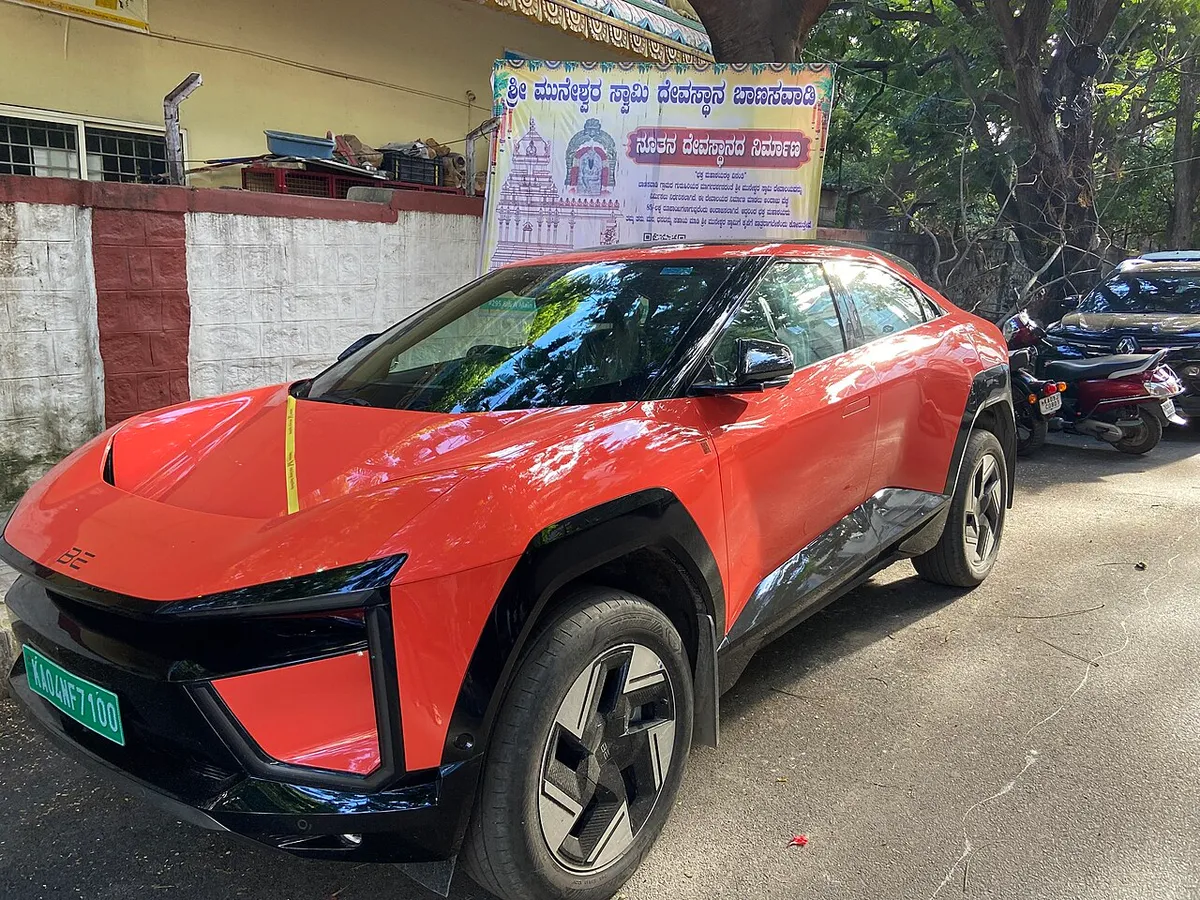
Fair price · India 2026
Prices checked 27 Sept 2026Range: ₹14,00,000 to ₹21,99,000 · depends on condition
Depreciation curve
5-year outlookThree ways to sell
Jaldi Bikega
Quick sell · 1–3 days
₹14,00,000
Sahi Daam · pick
Fair price · 5–10 days
₹19,99,500
Meri Marzi
Premium · 2–4 weeks
₹27,00,000
New price from
₹19,00,000
Varies by variant and year
In gold
157.3g
@ ₹12,712/g (intl. rate)
Drops by
₹44,400
every month waiting
= Netflix for
13419 mo
(at ₹149/month)
Buying used? Check vehicle history first
Verify owner count, insurance, challan and blacklist on Parivahan
How Much Is a Used Mahindra BE 6 Worth in India?
A used Mahindra BE 6 is worth ₹14,00,000 to ₹27,00,000 in India in 2026, depending on its condition, total mileage, and specific variant. This range reflects whether the car is nearly new with low kilometres or has seen more use and wear. Factors like the car’s service history, remaining manufacturer warranty, and verified battery health heavily influence its final price.
Is the Mahindra BE 6 Still Worth It in 2026?
Absolutely, the Mahindra BE 6 remains a compelling choice in 2026, especially for used car buyers. Having launched in late 2024 or early 2025, most used BE 6 units you’ll find today are only 1-2 years old. This means they are often still under the original manufacturer’s standard warranty (typically 3 years/1 lakh km) and definitely under the battery warranty (8 years/1.6 lakh km), offering significant peace of mind.
The BE 6 benefits from Mahindra’s robust electric vehicle platform, offering a modern driving experience with decent range for daily commutes and occasional longer trips. Mahindra’s service network across India is extensive, ensuring spare parts and technical support are readily available, which is a major plus for EV ownership. Software updates continue to refine the user experience, keeping the car relatively current.
However, like any EV, depreciation can be a factor in the initial years. But for a buyer, this means getting a nearly new electric SUV at a significantly reduced price compared to its original cost. The BE 6’s distinctive design and strong build quality mean it ages well.
Bottom line: If you’re looking for a stylish, reliable, and relatively new electric SUV with strong brand backing and active warranties, the Mahindra BE 6 is still a very smart buy in 2026.
Mahindra BE 6 Price Guide
| Condition | Price Range | What It Means |
|---|---|---|
| Like New | ₹22,00,000 – ₹27,00,000 | Under 15,000 km, pristine exterior and interior, verified battery health above 90%, full authorized service history, active manufacturer warranty. |
| Good | ₹18,00,000 – ₹21,99,000 | Up to 30,000 km, minor cosmetic wear (small scratches), battery health 85-90%, regular service records, potentially still under warranty. |
| Fair | ₹14,00,000 – ₹17,99,000 | Over 30,000 km, visible dents/scratches, battery health 80-85%, may have minor gaps in service history, warranty might be nearing expiry. |
Prices can fluctuate by ₹30,000-₹70,000 based on specific battery pack size or trim level (e.g., higher-end variants with more features). Use the calculator below for a personalized estimate based on your exact specs.
Advantages — Why Buyers Pick the Mahindra BE 6 in 2026
Mahindra’s Proven EV Drivetrain and Range. The BE 6 comes with a reliable electric powertrain developed by Mahindra, offering a practical real-world range that’s more than sufficient for city driving and comfortable for inter-city commutes. Owners appreciate its consistent performance and efficiency, especially in stop-and-go traffic.
Modern, Feature-Rich Cabin. Step inside and you’ll find a contemporary interior dominated by a large, responsive infotainment screen and a digital driver’s display. It’s packed with connectivity features, advanced safety systems, and comfortable seating, making every journey enjoyable.
Strong and Widespread Service Network. One of Mahindra’s biggest strengths in India is its extensive service network. Even though the BE 6 is an EV, you’ll find authorized service centres in almost every major city and town, ensuring easy access to maintenance, diagnostics, and genuine spare parts. This is a huge factor for peace of mind.
Robust Build Quality for Indian Roads. Mahindra vehicles are known for their rugged build, and the BE 6 is no exception. Its sturdy chassis and suspension are well-suited to handle the varying road conditions across India, providing a confident and stable ride even on less-than-perfect surfaces.
Active Manufacturer Warranty. Since most BE 6 units in 2026 are only 1-2 years old, they typically come with the remaining manufacturer’s standard warranty (often 3 years/1 lakh km) and a longer warranty on the battery (8 years/1.6 lakh km). This significantly reduces the risk of unexpected major repair costs for the buyer.
Future-Proofing Against Fuel Costs. Owning an electric vehicle like the BE 6 means you’re insulated from fluctuating petrol and diesel prices. Charging at home is significantly cheaper than refuelling, leading to substantial long-term savings on running costs.
Distinctive and Head-Turning Design. The BE 6 is part of Mahindra’s ‘Born Electric’ range, which features a bold, futuristic design language. Its unique styling and road presence make it stand out from other premium SUVs, appealing to buyers who want a car that makes a statement.
Disadvantages — Why You Might Skip the Mahindra BE 6 in 2026
Charging Infrastructure Still Evolving. While India’s EV charging network is growing rapidly, public fast-charging stations can still be sparse or unreliable in tier-2 cities or on certain highway routes. Planning longer trips requires careful foresight, and you might experience occasional queues at popular charging points.
Initial Depreciation Can Be Significant. Like many new EVs, the BE 6 experienced a notable depreciation hit in its first 1-2 years. While this benefits used car buyers, it means sellers might not recover as much of their original investment as they might hope, especially if they sell within the first three years.
Limited Long-Distance Capability Without Planning. While the BE 6 offers a good range for most daily needs, if your primary use case involves frequent, spontaneous long-distance travel across states, the need for charging stops can be a constraint. Consider whether this fits your typical travel patterns.
Higher Cost for Specific EV Component Repairs. While EVs generally have fewer moving parts and require less frequent maintenance, repairs for specialized components like the battery pack or electric motor can be significantly more expensive than traditional ICE car repairs. Although unlikely for a 1-2 year old car, it’s a long-term consideration.
Infotainment Software Refinement. Some early owners have noted that while the infotainment system is feature-rich, it occasionally experiences minor software glitches or slow responses, requiring a system restart. While updates address these, it’s something to be aware of.
Boot Space Compromises. Due to the placement of the battery pack, some owners find the BE 6’s boot space, while adequate for most, isn’t as cavernous as some comparably sized petrol or diesel SUVs. If you frequently carry large luggage or equipment, check this during your inspection.
Factors That Affect Mahindra BE 6 Resale Value
Battery Health is the single biggest factor. For an EV, the remaining health of the high-voltage battery pack is paramount. Every percentage point below 90% can reduce resale by ₹15,000-₹25,000. If the battery health is below 80%, expect buyers to negotiate ₹70,000-₹1,20,000 off to account for potential future replacement or diminished range.
Total Kilometres Driven. Lower mileage always fetches a premium. A BE 6 with under 15,000 km per year is considered low. For every 10,000 km above this average, expect a reduction of ₹25,000-₹45,000 in its value. High mileage can signal more wear and tear on components.
Complete and Authorized Service History. A full, stamped service history from an authorized Mahindra service centre adds significant credibility and can boost your price by ₹35,000-₹60,000. Gaps in service records or reliance on unauthorized workshops can reduce value by ₹50,000-₹80,000.
Physical Condition (Exterior & Interior). A pristine exterior without dents, major scratches, or repainted panels, along with a clean, well-maintained interior, can add ₹30,000-₹50,000. Conversely, visible body damage or heavy interior wear will lead to deductions of ₹10,000-₹20,000 per affected panel or area.
Remaining Manufacturer Warranty. Since most BE 6 units are still young, an active manufacturer’s standard warranty (and especially the battery warranty) adds immense value, potentially ₹60,000-₹90,000. As the warranty period shortens, buyers will factor in future repair risks.
Specific Variant and Features. Higher trim levels of the BE 6, which come with larger battery packs, advanced safety features, or premium interiors, tend to retain their value better. These can command ₹40,000-₹80,000 more than base models.
Inclusion of Original Charging Accessories. Providing the original portable charger (if applicable) and any dedicated home charging unit (wallbox) adds convenience and value, typically ₹20,000-₹30,000, as buyers won’t need to purchase these separately.
City of Sale. Demand for EVs can vary regionally. Cities with better charging infrastructure or higher EV adoption rates (like Bengaluru, Delhi, Pune) might see slightly higher prices, potentially adding ₹15,000-₹30,000 compared to smaller towns.
Maintenance Cost Breakdown (India, 2026)
Table 1 — Authorized Service Centre (genuine parts, full cost)
| Service | Cost | When Needed |
|---|---|---|
| Annual Basic Service (EV inspection, software update, fluid checks) | ₹6,500 – ₹10,500 | Annually or every 10,000 km |
| Front Brake Pad Replacement | ₹8,500 – ₹12,500 | Every 30,000-50,000 km (less due to regenerative braking) |
| Rear Brake Pad Replacement | ₹6,000 – ₹9,000 | Every 40,000-60,000 km |
| Tyre Replacement (Set of 4, EV-specific) | ₹32,000 – ₹55,000 | Every 40,000-60,000 km |
| AC Gas Refill & System Check | ₹2,800 – ₹4,500 | Every 2-3 years, or as needed |
| 40,000 km Major Service (includes brake fluid change, coolant check) | ₹13,000 – ₹19,000 | Every 40,000 km |
| 12V Auxiliary Battery Replacement | ₹8,500 – ₹14,500 | Every 3-5 years |
Table 2 — Third-Party Repair Shops (cheaper, with tradeoffs)
| Service | Cost | Tradeoff |
|---|---|---|
| Annual Basic Service (inspection, minor checks) | ₹3,500 – ₹6,500 | No official service stamp, potential for non-OEM parts, risk to warranty. |
| Front Brake Pad Replacement | ₹4,500 – ₹7,500 | Use of aftermarket pads, variable quality, no warranty on parts/labour. |
| AC Gas Refill | ₹1,800 – ₹3,000 | Quality of refrigerant gas may vary, expertise on EV AC systems might be limited. |
| Tyre Replacement (Set of 4, non-EV specific) | ₹25,000 – ₹40,000 | May not be EV-specific tyres (lower efficiency, higher noise), no warranty support. |
Annual running cost estimate: ₹10,000-₹20,000 budget for routine checks and wear-and-tear at this age, with major component issues (battery, motor) unlikely until year 5-7 unless abused.
Known Issues — Reported by Real Mahindra BE 6 Owners
Occasional Infotainment System Glitches. Forums like Team-BHP and Reddit r/CarsIndia have seen reports from some early BE 6 owners about the large touchscreen infotainment system occasionally freezing or becoming unresponsive. This usually resolves with a system restart, but it can be a minor annoyance.
Flimsy Charging Port Cover. A few owners have noted that the charging port cover mechanism feels less robust than expected, with some reporting it occasionally sticking or not closing flush, especially after prolonged exposure to dust or rain. This is a minor cosmetic and functional concern.
Real-World Range Discrepancies. While the official range figures are good, YouTube long-term ownership reviews often highlight that the actual range achieved can drop significantly in heavy city traffic, with aggressive driving, or when the AC is constantly running at full blast. This is common for EVs but worth managing expectations.
Minor Panel Gap Inconsistencies. Some initial production units, as noted in early user reviews on CarDekho and CarWale, displayed minor inconsistencies in panel gaps around the doors or bonnet. While mostly cosmetic and not affecting structural integrity, it’s something to check during inspection.
Faster Tyre Wear Than Expected. Due to the instant torque delivery and heavier weight of electric vehicles, some BE 6 owners have reported that tyres wear out faster than they might expect compared to a traditional ICE car. This is especially true with spirited driving and requires more frequent rotation or earlier replacement.
Limited Storage Options in Cabin. While the cabin is modern, a few owners have mentioned that the number of practical storage compartments, cup holders, and cubbies in the centre console or door pockets is somewhat limited compared to other SUVs in its segment.
Warranty Status Timeline
| Period | Warranty Status |
|---|---|
| Late 2024 – Late 2027 | Manufacturer standard warranty (active for most units in 2026) |
| Late 2024 – Late 2032 | High-voltage battery warranty (active for all units in 2026) |
| 2026 | Extended warranty / MahindraCare+ if purchased, likely active for most units |
| 2026 | No manufacturer warranty if 3-year standard warranty expired. All repairs out-of-pocket for such rare cases. |
| 2026 | Third-party insurance: Worth considering for additional roadside assistance or specific wear-and-tear items not covered by manufacturer warranty, but less critical if the original warranty is still robust. |
Pre-Purchase Inspection Checklist
Essential Checks
- Check RC details on Parivahan app — Verify the owner’s name, registration date, and insurance status against the physical documents.
- Match Chassis Number — Ensure the chassis number (found under the bonnet, on a doorframe sticker, and possibly under the front passenger seat) matches the RC book.
- Check Odometer Reading — Compare the dashboard odometer with service records. Low kilometres but heavily worn pedals or steering wheel are red flags for tampering.
- Cold Start Test — Arrange to see the car when it hasn’t been used for hours. A smooth, quiet start is crucial for an EV. Listen for any unusual noises.
- Check All Four Tyres — Look for uneven wear patterns, which can indicate alignment issues or prior accident damage. Check the tyre brand and model.
- Open Bonnet Inspection — Check for any signs of fluid leaks (coolant, brake fluid), the condition of the 12V battery, and general cleanliness.
- Test AC on Max — Run the air conditioning on full for at least 5 minutes. Weak cooling suggests a compressor or gas issue, which can be a ₹2,500-₹15,000 repair.
- Drive for 15+ Minutes — Test acceleration, braking (check for pulling or vibrations), and steering response. Listen for any unusual sounds from the suspension or motor.
- Check All Electricals — Verify all power windows, central locking, ORVMs, infotainment system, reverse camera, and all lights (headlights, indicators, brake lights) are fully functional.
- Look for Paint Mismatch — Carefully check all body panels for variations in paint shade, which indicates accident repair. Also, inspect panel gaps; they should be uniform.
- Check Undercarriage for Rust — Pay attention to wheel arches, suspension components, and the floor pan, especially if the car has been in coastal areas.
- Verify Duplicate Key — Ensure both original keys are available. Getting a new smart key from the dealer can cost ₹8,000-₹25,000.
- Test Charging Functionality — If possible, verify the car charges correctly using a public fast charger or a home charging point.
Insider Checks
THE BRAKE & ACCELERATOR PEDAL TEST (Odometer Fraud Detector): Look closely at the rubber pads on the accelerator and brake pedals. An odometer can be rolled back, but pedal wear is hard to fake. For a 1-2 year old BE 6 with typical mileage (under 30,000 km), the pedals should still have clear grooves and texture. If they are smooth, shiny, or worn flat, the car has done significantly more kilometres than claimed, potentially 80,000+ km. Brand new pedal rubbers on a young car are also suspicious – someone replaced them to hide real usage. Missing this could cost you ₹50,000-₹1,00,000 in overpayment.
THE STEERING WHEEL WEAR TEST: Run your hands around the steering wheel at the 10 and 2 o’clock positions – these are the spots that wear fastest from daily grip. On a genuinely low-kilometre BE 6, the steering wheel texture should be uniform all around. If the 10 and 2 o’clock areas are noticeably smoother, shinier, or have worn patches compared to the 6 o’clock position, the car has been driven extensively, regardless of the odometer reading. This can indicate an extra ₹40,000-₹70,000 worth of hidden wear.
THE PAINT THICKNESS / FRIDGE MAGNET TEST: Factory paint on a BE 6 is usually between 100-130 microns thick. Invest in a cheap paint thickness gauge (₹800-₹1,500 on Amazon) and check every panel. Readings above 200 microns almost certainly mean that panel has been repainted, indicating accident repair. If you don’t have a gauge, use a simple fridge magnet – it will stick weaker or not at all to areas with thick body filler or multiple layers of paint. Crucially, check the ROOF; very few people repaint the roof unless there was a significant accident. Missing accident history can lead to ₹60,000-₹1,50,000 in future repair costs or reduced resale.
THE OBD2 SCANNER TEST (₹800 investment saves lakhs): This is a must for an EV. Buy a basic Bluetooth OBD2 scanner (₹800-₹1,500 online), plug it into the port under the dashboard, and use a free app like Torque or Car Scanner. The ECU (Engine Control Unit) stores the car’s real odometer reading and hidden error codes, including battery health parameters for EVs. If the OBD reading doesn’t match the dashboard, it’s confirmed odometer fraud. More importantly for an EV, it can give you a more accurate battery health percentage (SOH - State of Health) and reveal any underlying electrical issues not visible on the dashboard. Ignoring this could mean buying a car with a compromised battery, potentially costing ₹2,00,000-₹5,00,000 for replacement.
THE TYRE DATE CODE CHECK: Look at the sidewall of each tyre for a 4-digit number in an oval (e.g., “2523” means week 25 of 2023). If the car is from 2025 but the tyres are from 2022 or 2023, they might be old stock or the car is older than claimed. If all four tyres have different dates, it indicates multiple replacements due to high usage or damage, rather than a single set replacement. New tyres cost ₹30,000-₹50,000, so factor this in if they’re old.
Common Scams to Watch For (India 2026)
Kms Rollback (Odometer Tampering): This is still prevalent, even with EVs. Sellers reduce the odometer reading to demand a higher price. How to Detect: Always cross-reference the odometer with service records, PUC certificates, and the car’s condition (pedal/steering wear). An OBD2 scanner can often reveal the true mileage stored in the ECU. What to Do: Walk away immediately. This is outright fraud.
Curbstoning (Unlicensed Dealer Posing as Individual): Unlicensed dealers pose as private sellers to avoid warranty obligations, consumer protection laws, and GST. They often have multiple cars listed. How to Detect: Look for multiple listings from the same phone number or professional-looking photos. Ask specific questions about the car’s history that only a true owner would know. What to Do: Insist on meeting at the seller’s registered address. If they push back, be wary.
Hidden Accident History by Cosmetic Repair: Cars involved in major accidents are cosmetically repaired and sold as “non-accidental.” Airbag modules can be reset. How to Detect: Use the paint thickness/magnet test. Check for uneven panel gaps, misaligned body parts, or signs of welding under the bonnet or in the boot. Check if the airbag warning light comes on briefly when you start the car and then goes off. If it stays on or doesn’t come on at all, it’s a red flag. What to Do: Get a full pre-purchase inspection from an independent mechanic.
Flood-Damaged Cars: These cars are bought cheap, cleaned up, and sold in cities unaffected by floods. Electrical issues often surface months later, which are particularly severe for EVs. How to Detect: Check for rust on non-exposed metal parts (seat rails, bolts under carpets), musty smell in the cabin, water stains under carpets or in the boot lining. Check for fogging in headlamps or tail lamps. What to Do: Avoid at all costs, especially for EVs. The long-term electrical reliability will be severely compromised.
Fake Service Records: Sellers forge service stamps or manipulate digital records to show a clean history. How to Detect: Always cross-verify the service history by calling the authorized Mahindra service centre with the car’s VIN (Vehicle Identification Number). They can confirm genuine service entries. What to Do: Do not proceed if the service centre cannot confirm the records.
Pending Loan / Hypothecation on RC: The seller might not have cleared the outstanding loan on the car, meaning the bank still has a claim on it. How to Detect: Always check the RC book for “Hypothecation” entries. You can also verify the vehicle’s financial status on the Parivahan app. What to Do: Ensure the RC shows “No Hypothecation” before making any payment. Insist on a No Objection Certificate (NOC) from the bank.
Battery Health Misrepresentation: For EVs, sellers might claim high battery health without any diagnostic proof. How to Detect: Request a recent battery health report from an authorized service centre or use an OBD2 scanner to check the State of Health (SOH). What to Do: If the seller refuses or the SOH is low, negotiate heavily or look for another car.
Seller’s Guide — How to Maximize Your Mahindra BE 6 Resale
Selling your Mahindra BE 6 in 2026 can be quite lucrative given its relatively young age and EV appeal. Here’s how to get the best price:
Data Preparation
Before anything else, secure your personal data. Go to your BE 6’s infotainment system: Settings > System > Reset Options > Erase all data (factory reset). This will wipe all your paired phones, navigation history, and personal settings, protecting your privacy. This process takes about 15-20 minutes.
Physical Preparation
Fix Minor Dents and Scratches: A small investment here yields big returns. A local denter might charge ₹2,500-₹4,000 per panel for minor touch-ups, but a pristine exterior can easily add ₹10,000-₹15,000 to your asking price, as it creates a much better first impression. Thorough Interior and Exterior Cleaning: Get a professional deep clean and detailing done. Shampoo the seats, clean the dashboard, remove all personal items, and ensure the cabin smells fresh. A clean car feels well-maintained and adds ₹8,000-₹12,000 to perceived value. Check and Top Up All Fluids: Ensure the coolant, brake fluid, and windshield washer fluid are at optimal levels. A buyer opening the bonnet will appreciate a well-maintained engine bay. Ensure All Electricals Work: Double-check that all power windows, central locking, ORVMs, the music system, and all lights (headlights, tail lights, indicators) are fully functional. Any non-working part will be a negotiation point. Charge the Battery to 90%+: Presenting the car with a near-full charge shows confidence in its range and allows for a proper test drive.
Documentation
Gather All Original Documents: Have your RC book, valid insurance policy, up-to-date PUC (Pollution Under Control) certificate, and critically, your complete service history booklet ready. A full, authorized service record adds immense credibility and can boost your price by ₹30,000-₹50,000. Original Accessories: Include the original portable charger, any cables, and the owner’s manual. These small inclusions show care and completeness, adding ₹5,000-₹10,000.
Listing Photography
Clear Photos in Daylight: Take high-resolution photos in good natural light. Capture the exterior from all four corners, ensuring no reflections or shadows obscure the bodywork. Interior Shots: Photograph the dashboard, infotainment screen (preferably powered on), seats (front and rear), and the boot space. Key Details: Include a clear shot of the odometer reading and, importantly for an EV, a photo of the battery health percentage displayed on the car’s screen (if available through the menu). Also, a photo of the service history booklet with stamps.
Platform Choice
Consider listing your Mahindra BE 6 on Bids44 where buyers compete through a bidding process, often leading to better realized prices. You can also explore platforms like OLX for direct buyer interaction, or Spinny and Cars24 for quick, hassle-free sales, though these might offer slightly lower prices as they factor in their margins.
Final Verdict — Should You Buy or Sell in 2026?
For buyers: The Mahindra BE 6 in 2026 is an excellent choice if you’re seeking a stylish, modern, and reliable electric SUV at a significant discount from its original price. It’s a particularly smart buy if you find a unit with under 25,000 km, a verified battery health above 88%, and a complete, authorized service history—these units offer the best value and peace of mind. The active manufacturer and battery warranties on most units are a major advantage, mitigating risks associated with EV ownership. If your budget stretches higher and you prioritize the absolute latest technology and a full, fresh warranty, consider a brand-new Mahindra XUV.e9. Otherwise, a well-maintained used BE 6 in the Good to Like New range — see the price table above — is a fantastic deal at a significant discount from its original on-road price.
For sellers: You’re in a favourable position to sell your Mahindra BE 6 in 2026, as it’s still a relatively new and desirable EV in the market. With the right preparation, you can expect a realistic listing price in the Good to Like New range for well-maintained units with good battery health — consult the price table above for current figures. Be prepared for some negotiation, with the floor toward the Fair range for a car with slightly higher mileage. A private sale will generally yield ₹40,000-₹70,000 more than a dealer exchange. To maximize your return and attract competitive offers, list your Mahindra BE 6 on Bids44.
Personalized estimate
Check your Mahindra value
Ten seconds. No signup.

Analyzing your item...
On Bids44, buyers compete for your item — so you always get the best price
Powered by Bids44 AI Fun fact
Your item is worth — grams of gold at today's rate
Gold rate: ~₹9,500/gram (Mar 2026). Every month you wait, your item loses value while gold goes up.
Happy with the price?
List on Bids44. Buyers compete. You pick the winner.
Ready to sell your Mahindra BE?
Bids44 is India's bidding marketplace. Buyers compete. You get the best price — not the first offer.
List on Bids44Frequently Asked Questions
How much is a used Mahindra BE 6 worth in India in 2026?
How do I check if my Mahindra BE 6 has a clean title?
Petrol or diesel Mahindra BE 6: which holds value better in 2026?
Does owner count affect Mahindra BE 6 resale value?
How much does a Mahindra BE 6 depreciate per year?
How does insurance status affect Mahindra BE 6 resale?
More like this
Related Cars guides
Chevrolet Sail
6-yr depreciation
Honda Brio
6-yr depreciation
Mahindra XUV400 EV
6-yr depreciation
Hyundai Grand i10 Nios
6-yr depreciation
Audi A4
6-yr depreciation
Hyundai Creta EV
6-yr depreciation
Also read