Phones · Resale guide
Redmi Note 10S
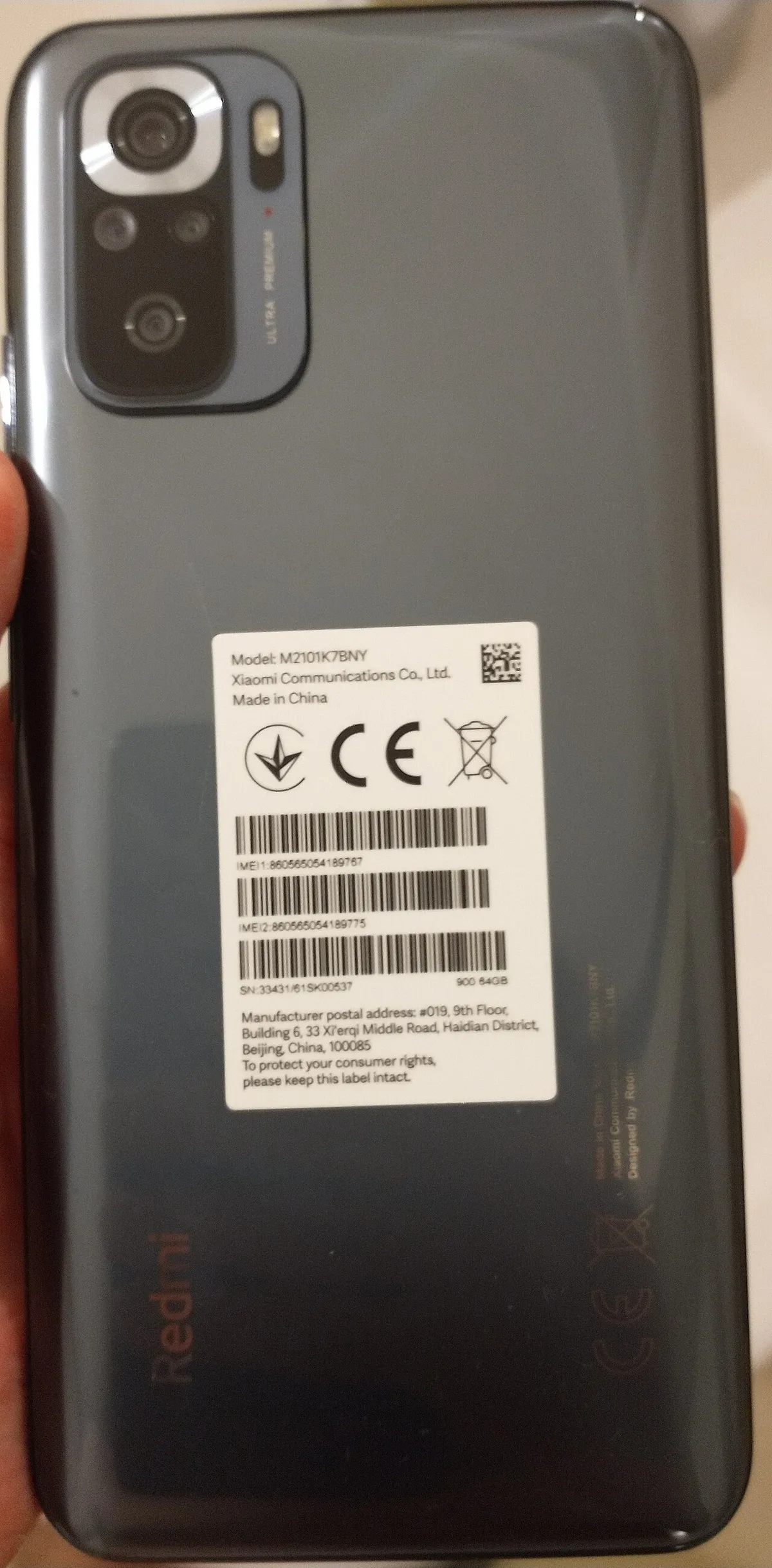
Fair price · India 2026
Prices checked 23 Aug 2026Range: ₹2,600 to ₹5,000 · depends on condition
Depreciation curve
5-year outlookThree ways to sell
Jaldi Bikega
Quick sell · 1–3 days
₹2,600
Sahi Daam · pick
Fair price · 5–10 days
₹4,500
Meri Marzi
Premium · 2–4 weeks
₹6,200
You paid new
₹16,999
Lost ₹12,499 (74%)
In gold
0.4g
@ ₹12,712/g (intl. rate)
Drops by
₹500
every month waiting
= Netflix for
30 mo
(at ₹149/month)
How Much Is a Used Redmi Note 10S Worth in India?
A used Redmi Note 10S is worth ₹2,600 to ₹6,200 in India in 2026, depending on condition, storage variant, and battery health. The Note 10S was one of the bestselling budget phones in India in 2021, which means supply is plentiful in the used market — beneficial for buyers who can shop around for the best condition, but a headwind for sellers competing with many similar listings. Units in Like New condition with pristine AMOLED displays fetch the upper end; well-worn units with visible scratches and degraded battery life hover near the floor.
Is the Redmi Note 10S Still Worth It in 2026?
The Redmi Note 10S launched in India in May 2021 at ₹14,999 (6GB/64GB) and was one of the most talked-about budget phones that year, primarily for bringing a 64MP AMOLED display and a Helio G95 chipset to a sub-₹17,000 price point. In 2026, it is approximately five years old.
The biggest limitation by 2026 is the absence of 5G. India’s 5G rollout has reached hundreds of cities, and the next generation of apps and services will lean increasingly on 5G-specific features. The Note 10S, with its 4G-only chipset, cannot access 5G networks at all. For buyers using Jio or Airtel 5G in cities where coverage is strong, the Note 10S will consistently connect to the slower 4G network.
Software support from Xiaomi ended several years ago — the Note 10S shipped on Android 11, received Android 12 via MIUI 13, and has not received major Android version updates beyond that. Security patches from Xiaomi are not guaranteed for a five-year-old device. Users who install MIUI-based Xiaomi system updates today are receiving incremental MIUI updates, not new Android security patches.
That said, at ₹5,000–7,000 in the used market, the Redmi Note 10S still offers a 6.43-inch AMOLED display with punch-hole camera cutout, the capable Helio G95 gaming chipset, and a reliable 5000mAh battery. For someone who primarily uses their phone for WhatsApp, YouTube, and photography in the budget segment, and does not need 5G, it remains functional.
Redmi Note 10S Price Guide
| Condition | Price Range | What It Means |
|---|---|---|
| Like New | ₹5,000 – ₹6,200 | No scratches, 90%+ battery health, screen protector used throughout, all functions working. |
| Good | ₹3,800 – ₹5,000 | Minor cosmetic wear, 80–89% battery health, all functions working. |
| Fair | ₹2,600 – ₹3,800 | Visible scratches or dents, 75–79% battery health, phone fully functional. |
Prices differ marginally across storage variants: 6GB/64GB, 6GB/128GB, 8GB/128GB. The jump from 64GB to 128GB adds ₹500–800 in like-for-like comparisons. Use the calculator below for a personalized estimate.
Advantages — Why Buyers Pick the Redmi Note 10S in 2026
AMOLED Display Quality Punches Well Above Its Price. The 6.43-inch Super AMOLED display with 1080p resolution and 180Hz touch sampling rate was exceptional for a sub-₹17,000 phone in 2021 and remains one of the best displays available at ₹5,000–9,000 in the used market in 2026. Deep blacks, vibrant colours, and good outdoor visibility all hold up. Competing phones at similar new prices often use IPS LCD panels; the Note 10S AMOLED is a meaningful advantage.
Helio G95 Handles Casual Gaming Well. The MediaTek Helio G95 is a gaming-oriented chipset that handles casual titles — BGMI on medium settings, Call of Duty Mobile, Free Fire — without significant stutter. It gets warm under sustained load, but it can manage a 30-minute gaming session without major throttling. For casual and moderate gamers in the budget segment, it delivers.
5000mAh Battery Lasts a Full Day. Even after five years of use, many Note 10S units with reasonable care will show 80%+ battery health, still delivering a full day of moderate use. The large 5000mAh cell ages better than smaller batteries — there’s more headroom before it becomes frustrating to use.
33W Fast Charging. Xiaomi included a 33W charger in the box, charging the 5000mAh battery in under an hour. At its launch price and original era, this was ahead of competition. In the used market in 2026, it still means you can top up quickly when needed.
3.5mm Headphone Jack. Unlike many 2022 and later phones that dropped the headphone jack, the Redmi Note 10S retains a 3.5mm port at the bottom. For users who rely on wired earphones — still the majority of budget segment users in India — this is a practical, daily-use advantage.
64MP Main Camera for Daylight. The Samsung ISOCELL GW3 64MP sensor produces detailed daylight shots that look impressive on social media. Color processing is punchy and vibrant. The Note 10S camera is not a low-light specialist, but for outdoor and well-lit indoor photography, results are solid for the used-market price.
Side-Mounted Fingerprint Sensor is Fast and Reliable. Unlike phones with in-display optical sensors that frustrate users with slow unlock times, the Redmi Note 10S uses a physical capacitive fingerprint sensor on the power button at the side of the frame. It is fast, accurate, and reliable in virtually every condition including slightly wet fingers.
Disadvantages — Why You Might Skip the Redmi Note 10S in 2026
No 5G — A Major Limitation. India’s 5G network is mature in 2026, reaching tier-2 and tier-3 cities. The Helio G95 in the Note 10S is a 4G-only chipset. Buyers who are planning to use this phone for more than a year will be using it in an increasingly 5G-dominant India with a permanently 4G-limited device. Competing phones at similar used-market price points — specifically the Redmi Note 11 or Note 12 — offer 5G capability.
Software Updates Have Ended. The Note 10S has been out of Xiaomi’s active update support for years. It shipped on MIUI 12 / Android 11 and received MIUI 13 / Android 12 as its final major update. By 2026, the phone is receiving no new Android versions and no guaranteed security patches from Xiaomi. This is a real concern for banking app compatibility and general security.
MIUI Bloatware and Ads in System Apps. Xiaomi’s MIUI on the Note 10S includes pre-installed apps that display promotional content and ads within the notification drawer and system apps. Multiple r/Xiaomi India threads and long-term review posts describe these as persistent and difficult to fully eliminate without rooting.
Only 60Hz Display Refresh Rate. Despite the excellent AMOLED quality, the Note 10S is limited to 60Hz refresh rate. Competing phones from 2021–2022 in the same budget offered 90Hz or 120Hz. By 2026’s used market, ₹5,000–7,000 buys phones with higher refresh rates in some categories.
Camera Struggles in Low Light. The 64MP sensor captures good daylight detail, but the Note 10S lacks optical image stabilization (OIS) and the low-light algorithms are not competitive with phones using Google’s or Apple’s computational photography pipelines. Night mode photos show noise and detail loss, especially in very dark environments.
Large Camera Module Protrudes Significantly. The quad-camera setup — 64MP main, 8MP ultrawide, 2MP macro, 2MP depth — sits in a raised rectangular module that extends notably from the back panel. Without a case, the phone rocks on flat surfaces, and the module is vulnerable to impacts during drops.
Factors That Affect Redmi Note 10S Resale Value
Battery health is the primary negotiating point. A Note 10S at 85% battery health will sell significantly faster than one at 74%. Buyers know a battery replacement costs ₹800–1,500 at third-party shops and use that number as a negotiating tool. Health below 75% is a near-guarantee of tough negotiations.
AMOLED screen condition is critical. The AMOLED panel’s vibrancy is the Note 10S’s biggest selling point. A scratched or cracked screen dramatically reduces appeal — buyers can see at a glance whether the screen has been cared for. A pristine AMOLED screen versus a heavily scratched one can represent a ₹1,500–2,500 price difference.
Storage variant matters. The 64GB base model is constraining in 2026 with app sizes growing. Buyers generally prefer the 128GB variants and will pay ₹500–1,000 more.
MIUI version and last update. Units still running MIUI 12 on Android 11 (never received the MIUI 13 / Android 12 update) are less desirable. Buyers prefer the Android 12 MIUI 13 update for the latest available software experience.
Physical condition of the back plastic. The Note 10S uses a polycarbonate back that scratches and picks up micro-abrasions through normal use. Heavy scratching signals the phone was not cased, which often correlates with screen and frame wear too.
3.5mm jack functional. A non-functional headphone jack — a common casualty of damage or lint accumulation — is a notable downgrade and will reduce appeal by ₹500–1,000.
Maintenance Cost Breakdown (India, 2026)
Table 1 — Xiaomi Authorized Service Centre
| Service | Cost | When Needed |
|---|---|---|
| Battery Replacement | ₹1,500 – ₹2,500 | Battery health below 75% or rapid drain/swelling. |
| Screen Replacement | ₹5,000 – ₹8,000 | Cracked or non-functional AMOLED. |
| Back Panel Replacement | ₹800 – ₹1,500 | Cracked rear polycarbonate. |
| Charging Port Repair | ₹1,000 – ₹2,000 | Intermittent USB-C charging. |
| Speaker Replacement | ₹500 – ₹1,200 | Distorted or non-functional audio. |
Table 2 — Third-Party Repair Shops
| Service | Cost | Tradeoff |
|---|---|---|
| Battery Replacement | ₹800 – ₹1,500 | Non-OEM cell, possibly inaccurate health reporting. |
| Screen Replacement | ₹2,500 – ₹5,000 | Non-AMOLED LCD possible, colour accuracy loss, touch sensitivity differences. |
| Charging Port | ₹400 – ₹900 | Non-OEM part, potential long-term reliability issue. |
Annual running cost estimate: ₹800–₹1,500 for accessories. A battery replacement is very likely within the next 1–2 years for most five-year-old units.
Known Issues — Reported by Real Redmi Note 10S Owners
MIUI Ads and Notifications in System Apps. The most consistent long-term complaint from Indian Redmi Note 10S owners — documented extensively on r/Xiaomi India, MIUI Community forums, and Amazon India reviews — is the presence of promotional notifications and in-app ads within Xiaomi’s system applications. These appear in the Music app, File Manager, and occasionally in system notifications. They can be disabled individually in each app’s settings, but the default-on state annoys users who expect a clean experience.
Helio G95 Throttles During Extended Gaming. MediaTek’s Helio G95 handles casual gaming reliably but begins to throttle after 20–30 minutes of sustained load in warm environments. Multiple r/Xiaomi threads from Indian users (playing BGMI and Free Fire) document frame drops in the second half of longer gaming sessions. The phone’s back becomes noticeably warm, and performance does not fully recover without a cool-down period.
Camera Module Prone to Wobble. The raised rectangular camera housing on the back of the Note 10S protrudes significantly. Multiple owner reviews on Flipkart and Amazon India (with hundreds of reports each) note the phone rocks noticeably on flat surfaces and the camera module is vulnerable to impact during drops without a case. Cases are effectively mandatory for this phone.
Limited Low-Light Camera Performance. Owners on r/Xiaomi and YouTube review comment sections frequently note that the Note 10S’s Night Mode photographs, while technically improved over no-night-mode, still produce noticeably noisy and soft images in very dark environments. The absence of OIS means any camera shake during a 1-second exposure adds blur. Real-world low-light shots from the Note 10S compare unfavourably with same-era phones using PDAF-optimized sensors and OIS.
No Security Updates in 2026. The Note 10S exited Xiaomi’s active security update schedule several years ago. A five-year-old device running MIUI without current security patches is vulnerable to known exploits that have been patched in Android 13 and 14. Users who do mobile banking, UPI payments, and handle sensitive data should be aware of this limitation. Multiple Mi Community India forum posts from 2023–2024 raised concerns about the end of update support for this model.
3.5mm Port Collects Lint. Multiple user reports on Amazon India and Flipkart reviews mention the 3.5mm headphone jack at the bottom accumulates lint and debris from pocket use, leading to intermittent audio issues. A simple cleaning with a toothpick usually resolves it, but it is a recurring maintenance task.
Warranty Status Timeline
| Period | Warranty Status |
|---|---|
| May 2021 – May 2022 | Xiaomi manufacturer warranty (1 year, expired for all units) |
| 2021 – 2022 | MIUI 13 / Android 12 update (final major update) |
| 2022 onward | No guaranteed security updates from Xiaomi |
| 2026 | No warranty. All repairs out-of-pocket. |
Pre-Purchase Inspection Checklist
Essential Checks
- Dial
*#06#and verify IMEI matches Settings > About Phone > MIUI Version > All Specs. Mismatch means hardware swap. - Test the side-mounted fingerprint sensor with your thumb and index finger in quick succession — it should unlock in under 0.5 seconds. Consistent slowness or failure indicates sensor wear or contamination.
- Check battery health in Settings > Battery & Performance. Note: MIUI does not display a percentage like iOS; look at the “Battery Usage” over the past 24 hours to infer drain rate. A Xiaomi app called “Battery Info” or a third-party app can show cycle count.
- Test the AMOLED display at maximum brightness outdoors or under a bright light — look for dead pixels, touch unresponsive zones (tap all four screen corners), and any burn-in (especially relevant for AMOLED panels used for video watching without dark mode).
- Test the 3.5mm headphone jack with your own earphones — listen for crackle, cutouts, or no audio on one channel.
- Check the camera app — launch it quickly and time the speed. Test all four cameras (main, ultrawide, macro, depth). Open the camera at night or in low light to gauge real performance.
- Test the USB-C port — charge the phone and verify “Charging (33W)” appears in the notification bar. Anything lower indicates a port or charging IC issue.
- Verify the Google account has been removed and a factory reset has been performed — MIUI’s Account Manager should show no Xiaomi or Google accounts signed in.
- Check MIUI version in Settings > About Phone — confirm it’s running MIUI 13 or later (the final major update).
- Play audio through the single bottom speaker for 1 minute — listen for distortion or rattling at higher volumes.
| Diagnostic Code | Function |
|---|---|
*#06# | Show IMEI — verify it matches Settings > About and box. |
Insider Checks
THE AMOLED BURN-IN TEST: Display a solid dark grey image (not pure black) at medium brightness and look for ghost outlines of status bar icons, keyboard, or navigation buttons. AMOLED screens used without dark mode for extended periods accumulate burn-in around static UI elements. Burn-in is permanent and cannot be reversed. Any visible ghosting at grey reduces the screen’s value significantly — budget ₹5,000–8,000 for screen replacement if severe.
THE SPEAKER CRACKLE TEST: Play a bass-heavy song at maximum volume for 30 seconds. The single bottom speaker on many Note 10S units develops a rattle or crackle from the driver loosening after years of use and vibration. A clean, clear sound at max volume means the speaker is healthy. Rattle = ₹500–1,200 for replacement.
THE PORT LINT TEST: Shine your phone flashlight into the USB-C port and the 3.5mm jack. Heavy lint accumulation in the charging port can cause intermittent or slow charging. Light lint can be cleaned with a wooden toothpick; compacted lint requires professional cleaning. If the port shows corrosion (green or white residue), the phone has had water exposure — not disclosed by the seller.
THE CAMERA WOBBLE TEST: Place the phone face-up on a flat surface without a case. It should rest flat. If it rocks, the camera module protrusion has been impacted (possibly from a drop) and may be misaligned. A misaligned camera module can affect camera focus performance and is a ₹2,000–3,500 repair if the camera itself is affected.
Common Scams to Watch For (India 2026)
MIUI Reset to Hide Bloatware. Some sellers perform a factory reset but re-enable all Xiaomi system apps and their notification permissions before showing the phone, making it appear cleaner than it is in real use. Ask to check Settings > Apps > Permissions > Notifications — if every Xiaomi app has notification permissions enabled, it’s in default factory state with all bloatware active.
Fake Storage Read. The 64GB variant is the base model; sellers may try to pass it off as 128GB by showing a storage screenshot taken from a different phone. Verify storage in Settings > About Phone > Storage. Do not rely on seller photos.
Chipset Impersonation. The Note 10S uses Helio G95. Some unscrupulous listings describe the chipset as “equivalent to Snapdragon 720G” — a vague and misleading comparison. Verify the chipset in Settings > About Phone, or use an app like AIDA64 or CPU-Z to confirm the exact chipset model.
Screen Replacement Passed as Original. A replaced screen on the Note 10S may use an IPS LCD panel rather than the original Super AMOLED, producing notably worse blacks and colour saturation. Compare the display output with a known AMOLED device — LCD panels look “washed out” in direct comparison, especially at an angle. The colour profile in MIUI’s Display settings may also be missing AMOLED-specific options if the screen has been replaced with LCD.
OG Box Mismatch. The original box contains the 33W charger and USB-C cable. Sellers who include third-party accessories in the original box to pass off as a “complete set” are misrepresenting the product. Verify the charger output rating on the body (33W / 3A for genuine).
Seller’s Guide — How to Maximize Your Redmi Note 10S Resale
Data and Account Prep:
- Back up photos to Google Photos and contacts to your Google account.
- Sign out of your Xiaomi Account (Settings > MI Account > Sign Out).
- Remove your Google Account and factory reset: Settings > About Phone > Factory Reset.
Physical Prep:
- Clean the AMOLED screen with a microfibre cloth — fingerprints and smudges make it look worse in photos than in person.
- Clean the USB-C and 3.5mm ports with a wooden toothpick to remove lint.
- If the battery has degraded significantly, a third-party replacement for ₹800–1,500 can meaningfully boost the selling price.
Listing Tips:
- Show the MIUI version (Settings > About Phone) in a screenshot — buyers on older MIUI versions are at a disadvantage.
- Photograph the AMOLED screen displaying a colourful image or video still — the vibrant display is your best visual selling point.
- Clearly note “No 5G” in your listing to avoid post-sale disputes from buyers who assumed 5G capability.
Platform Strategy: Listing on Bids44 will surface competitive bids from multiple buyers. Cashify accepts Note 10S units and provides instant pricing — expect ₹1,500–2,500 less than a private sale for the speed and convenience. See how it compares with the Redmi Note 11 and Redmi Note 12, and our best-value phones resale guide and resale value index.
Final Verdict — Should You Buy or Sell in 2026?
For buyers: The Redmi Note 10S in 2026 is for buyers who prioritise a high-quality AMOLED display and a headphone jack at a very low price (₹5,000–7,000) and can accept the significant caveats: no 5G, no security updates, MIUI bloatware, and limited low-light camera performance. If you need a phone for a household member who does basic tasks — calls, WhatsApp, YouTube — and does not need the latest security patches or 5G connectivity, it works at this price. Do not buy it if 5G capability is important to you in the next 2 years; the Redmi Note 11 or Note 12 in the same used price bracket are significantly better choices.
For sellers: The window to fetch meaningful returns on the Note 10S has largely passed. It competes with 5G phones in the same used-price bracket and loses. Sell quickly, price honestly (within the Good-to-Like New band shown above), and emphasize the AMOLED display and headphone jack as the selling points that differentiate it from cheaper alternatives. Do not overprice by comparing with 2021-era listings — the market has moved.
Personalized estimate
Check your Xiaomi value
Ten seconds. No signup.

Analyzing your item...
On Bids44, buyers compete for your item — so you always get the best price
Powered by Bids44 AI Fun fact
Your item is worth — grams of gold at today's rate
Gold rate: ~₹9,500/gram (Mar 2026). Every month you wait, your item loses value while gold goes up.
Happy with the price?
List on Bids44. Buyers compete. You pick the winner.
Ready to sell your Xiaomi Redmi?
Bids44 is India's bidding marketplace. Buyers compete. You get the best price — not the first offer.
List on Bids44Frequently Asked Questions
How much is a used Xiaomi Redmi Note 10S worth in India in 2026?
Does battery health affect the Xiaomi Redmi Note 10S resale value?
Is it better to sell my Xiaomi Redmi Note 10S on Cashify, OLX, or a bidding platform?
What accessories should I include when selling a used Xiaomi Redmi Note 10S?
Should I factory reset my Xiaomi Redmi Note 10S before selling?
When will the Xiaomi Redmi Note 10S lose value fastest?
More like this
Related Phones guides
Poco F6
6-yr depreciation
iPhone 18 Pro
6-yr depreciation
Google Pixel 6a
6-yr depreciation
Samsung Galaxy M04
6-yr depreciation
iQOO Z11
6-yr depreciation
Apple AirPods Pro 2
6-yr depreciation
Also read