Cars · Resale guide
Honda Jazz
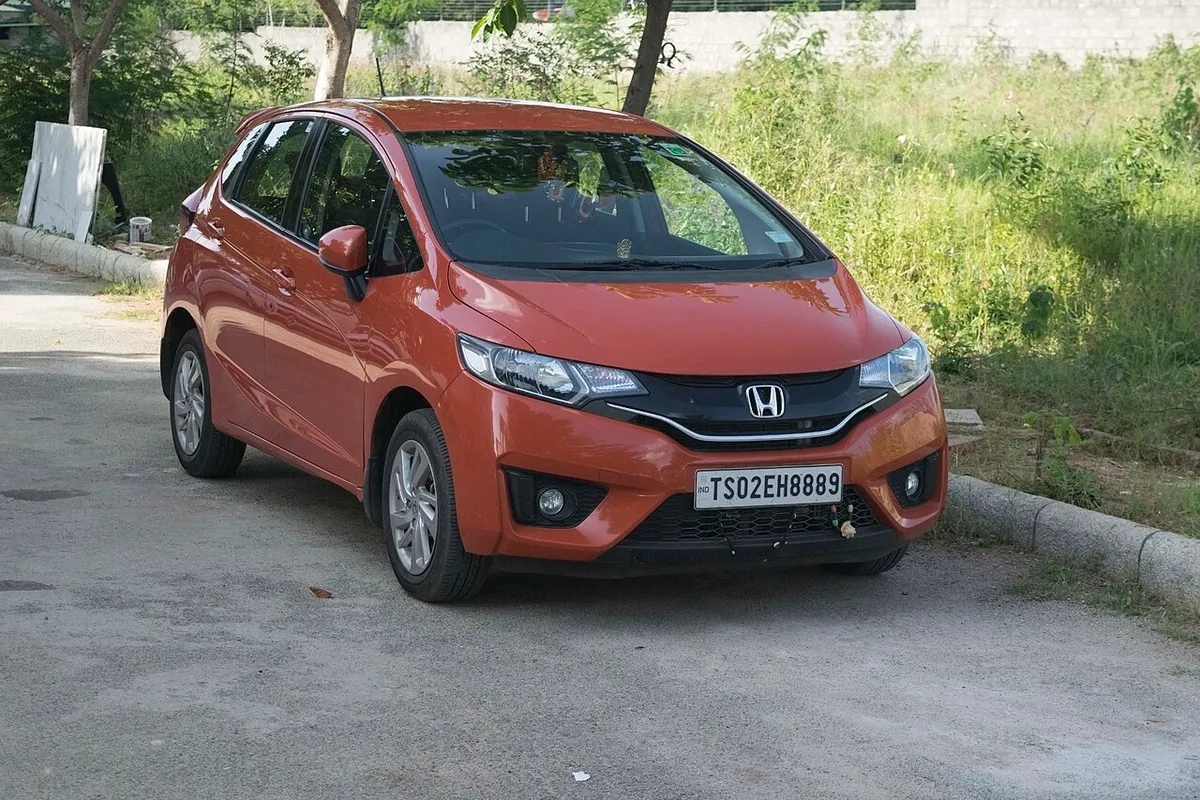
Fair price · India 2026
Prices checked 10 Jun 2026Range: ₹3,50,000 to ₹6,80,000 · depends on condition
Depreciation curve
5-year outlookThree ways to sell
Jaldi Bikega
Quick sell · 1–3 days
₹3,50,000
Sahi Daam · pick
Fair price · 5–10 days
₹5,90,000
Meri Marzi
Premium · 2–4 weeks
₹9,00,000
New price from
₹8,50,000
Varies by variant and year
In gold
46.4g
@ ₹12,712/g (intl. rate)
Drops by
₹15,700
every month waiting
= Netflix for
3959 mo
(at ₹149/month)
Buying used? Check vehicle history first
Verify owner count, insurance, challan and blacklist on Parivahan
How Much Is a Used Honda Jazz Worth in India?
A used Honda Jazz is worth ₹3,50,000 to ₹9,00,000 in India in 2026, depending on model year, condition, kilometres driven, and variant (petrol manual, petrol CVT, or diesel). A 2019-2020 model in Like New condition with low kilometres commands the upper range; older 2015-2017 models in average condition fall well below the midpoint.
Is the Honda Jazz Still Worth It in 2026?
The Honda Jazz was discontinued in India in late 2020, and Honda has not announced any replacement. This makes the Jazz a unique proposition in the used car market: a premium compact hatchback with no direct current equivalent. Its near-zero floorboard (Magic Seats) folding rear seat system, which allows the rear seats to fold flat or tumble forward for maximum cargo space, remains one of the most practically versatile interiors in any hatchback ever sold in India.
Honda discontinued the Jazz not because of poor quality, but because of soft demand — Indian buyers increasingly preferred SUV styling over practical hatchbacks. The cars that were sold are well-built, and owner communities on Honda Jazz Club India and r/IndiaCars consistently rate it among the most reliable compact hatchbacks ever sold in the market.
The 1.2L petrol (90 bhp) paired with either a 5-speed manual or CVT, and the 1.5L diesel (100 bhp) with a 6-speed manual, are all durable, low-maintenance powertrains. The CVT variant is particularly sought after in the used market for city driving comfort. The Jazz sits slightly above hatchback competitors in terms of build quality, ride comfort, and interior space per litre — making it a genuine value proposition in 2026.
For buyers who value interior practicality, build quality, and a mature premium-hatchback feel over SUV ground clearance and styling, the used Honda Jazz is one of the most compelling choices available.
Honda Jazz Price Guide
| Condition | Price Range | What It Means |
|---|---|---|
| Like New | ₹7,00,000 – ₹9,00,000 | 2019-20 model, under 30,000 km, single owner, no accidents, full service history at Honda. |
| Good | ₹5,00,000 – ₹6,80,000 | 2017-18 model or 2019-20 with 40,000-70,000 km, minor cosmetic wear, all functions excellent. |
| Fair | ₹3,50,000 – ₹4,80,000 | 2015-16 model, 80,000+ km, some cosmetic wear, functional but showing age. |
Diesel variants and CVT petrol models command a premium of ₹50,000-1,00,000 over the manual petrol equivalent. Use the calculator below for a personalized estimate based on year and variant.
Advantages — Why Buyers Pick the Honda Jazz in 2026
Magic Seats — Unmatched Cargo Versatility. The Jazz’s rear seat system is arguably its defining feature and has no real competitor in the Indian used car market. The rear seats can fold completely flat (creating a van-like floor), tumble completely forward (creating tall cargo space for plants, bikes, or furniture), or remove the front passenger headrest to load exceptionally long items. This transforms a compact hatchback into a practical utility vehicle without any sacrifice in normal use.
Exceptional Interior Space for the Footprint. The Jazz punches far above its weight in interior space. Despite its compact exterior, rear passengers get genuinely generous knee room, and the near-flat floor (due to the fuel tank mounted under the front seats) means no uncomfortable tunnel hump in the rear. Honda’s space engineering here was genuinely ahead of its time.
Premium Build Quality and Refinement. The Honda Jazz felt premium at launch and has aged well. The cabin materials, paint quality, and overall build feel more solid than many budget SUVs from the same era. Road noise and NVH refinement are better than average for the segment.
Reliable and Low-Maintenance Powertrains. Honda’s 1.2L petrol and 1.5L diesel engines are known for longevity in India. The Honda Earth Dreams CVT, while older in design, is reliable with proper maintenance and is particularly suited to city driving. Honda service network is extensive in India, and Jazz-specific spares remain available.
Fuel Efficiency. The 1.2L petrol delivers 16-18 km/l under real-world mixed conditions, and the diesel hits 22-25 km/l. The CVT petrol trades some efficiency for convenience — expect 14-16 km/l in city driving.
Unique Identity. The Jazz is discontinued, which means no new ones can be bought. This scarcity gives it a character that resonates with buyers who want something different — not one of the millions of Swift, i20, or Baleno units on Indian roads.
Disadvantages — Why You Might Skip the Honda Jazz in 2026
Discontinued — Parts May Get Harder. Honda discontinued the Jazz in India, and while spare parts are currently available through Honda service centres and the thriving aftermarket, certain body panels, trim pieces, and electronic modules will become progressively harder to source over the next 5-10 years. Plan for higher parts costs on accident repairs.
Ground Clearance Is Modest. At 165mm, the Jazz has adequate but not generous ground clearance for Indian roads. On bad roads or during monsoon flooding, it requires more careful driving than a crossover or SUV. This is a real day-to-day consideration.
Back Seat Headroom Can Be Tight for Tall Adults. Despite the great knee room, the Jazz’s sloping roofline reduces headroom for passengers over 5’11” in the rear. This is a known compromise in the design.
CVT Can Feel Underpowered Under Hard Acceleration. The CVT Jazz’s 1.2L engine produces 90 bhp. Under highway merging situations or quick overtaking, the CVT’s rubber-band feel is noticeable. It’s not a driver’s car, but it’s comfortable and refined.
Higher Insurance Costs vs. Budget Hatchbacks. As a premium hatchback with IDV (Insured Declared Value) typically higher than average Maruti Suzuki models, insurance premiums on the Jazz are correspondingly higher. Factor this into the total cost of ownership.
Small Fuel Tank. The Jazz has a 40L fuel tank. At 14-16 km/l city efficiency, the CVT can require refueling every 500-550 km, which some users find inconvenient for long highway trips.
Factors That Affect Honda Jazz Resale Value
Model year and mileage are the primary drivers. A 2020 model with 25,000 km is worth dramatically more than a 2015 model with 90,000 km — more so than for cars with larger production volumes and wider spare parts availability.
Variant selection changes the price significantly. In order of value:
- 2020 ZX CVT petrol > 2020 V CVT petrol > 2020 VX diesel > 2018 VX diesel > manual petrol variants
Single owner, full Honda service history. The Jazz has a devoted owner community and buyers pay a premium for verified service history — ideally completed at Honda-authorized dealers. This can add ₹30,000-70,000 to the asking price versus an equivalent car with unknown service history.
Accident history is a major discount trigger. Even a single repaired accident, especially structural damage, will reduce the Jazz’s value by ₹50,000-1,50,000 depending on the extent. This is more impactful for the Jazz than for mainstream models because parts are harder to replace perfectly.
Colour matters. Sporty colours (Arizona Red, Gold Edition Yellow) can command a small premium. White and silver are most saleable but most common. Metallic finishes in good condition are preferred by buyers.
Maintenance Cost Breakdown (India, 2026)
Table 1 — Honda Authorized Service Centre
| Service | Cost | Frequency |
|---|---|---|
| Periodic Service (petrol) | ₹4,500 – ₹7,000 | Every 10,000 km / 1 year |
| Clutch Replacement (manual) | ₹12,000 – ₹18,000 | Every 70,000-1,00,000 km or as needed |
| CVT Fluid Flush | ₹4,000 – ₹6,000 | Every 40,000 km (critical for CVT longevity) |
| Front Brake Pads + Discs | ₹5,000 – ₹9,000 | Every 40,000-50,000 km |
| Battery Replacement | ₹5,000 – ₹8,000 | Every 3-5 years |
| Timing Chain Service | ₹8,000 – ₹14,000 | Around 80,000-1,00,000 km |
| AC Compressor Repair | ₹12,000 – ₹25,000 | As needed (common with age) |
| Diesel Fuel Pump | ₹18,000 – ₹35,000 | Rare, but expensive when needed |
Table 2 — Trusted Local Mechanics (outside Honda network)
| Service | Cost | Tradeoff |
|---|---|---|
| Periodic Service | ₹2,500 – ₹4,000 | OEM or aftermarket parts; verify oil spec (Honda recommends specific viscosity). |
| Clutch Assembly | ₹7,000 – ₹12,000 | Aftermarket parts available; ensure quality brands (Valeo, Bosch). |
| Brake Pads | ₹2,000 – ₹4,000 | Branded aftermarket (Brembo, Bosch) are acceptable. |
Annual maintenance budget: ₹8,000-18,000 for a well-maintained car. The CVT variant needs disciplined CVT fluid changes; skipping them is the single biggest cause of premature CVT failure (₹80,000-1,50,000 for a replacement or rebuilt unit).
Known Issues — Reported by Real Honda Jazz Owners
CVT Jerking at Very Low Speeds. A well-documented issue on Honda Jazz India forums — the CVT can exhibit a judder or jerk when moving at very slow crawling speeds in heavy traffic, particularly when the engine is cold. This typically manifests as the car lurching slightly while barely moving. Honda released software calibration updates for some units, but the issue persists on some CVTs and is more pronounced on higher-mileage units. It is a CVT characteristic rather than a defect, but it can feel alarming to new owners.
AC Cooling Inconsistency. Multiple Jazz owners on Club India and Honda Jazz India Facebook groups report the AC losing cooling efficiency after 4-6 years, with the root cause being condenser clogging or refrigerant leakage at the compressor seal. The compact front-end packaging on the Jazz makes AC components more exposed to road debris than some competitors. AC service is a common cost item for older Jazz units.
Rear Wiper Motor Failure. An oddly common failure point for the Jazz — the rear wiper motor and linkage have a reputation for failure, particularly after monsoon seasons with heavy wiper use. Replacement costs ₹3,000-7,000. Several owners on Jazz owner communities recommend checking this during any pre-purchase inspection.
Diesel Fuel Injector Sensitivity. The 1.5L diesel engine, while reliable overall, is sensitive to fuel quality. Adulterated or contaminated diesel (which is not uncommon at smaller petrol stations outside metros) can damage injectors over time. Jazz diesel owners in Tier-2 and Tier-3 cities report higher-than-average injector service costs.
Paint Swirl Marks. The Jazz’s pearl white paint (a popular colour) is susceptible to swirl marks from improper washing. While purely cosmetic, it is almost universal on white Jazz units that were not regularly machine-polished. Factor in a ₹3,000-7,000 paint correction cost if this matters to you.
Warranty Status Timeline
| Period | Warranty Status |
|---|---|
| At purchase (2015-2020) | Honda standard 3-year/unlimited km warranty |
| Extended warranty (Honda) | Available up to 5 years at purchase time |
| 2026 | All 2015-2020 units are fully out of warranty |
| 2026 | No Honda warranty available. All repairs out-of-pocket. |
| Used purchase | Some dealers offer 3-6 month used-car warranty; always get in writing |
Pre-Purchase Inspection Checklist
Essential Checks
- Get an independent inspection from a Honda-trained mechanic or a trusted independent garage before paying. A professional pre-purchase inspection for a car costs ₹1,500-3,000 and can save you lakhs.
- Check all service records — Honda Jazz owners who maintained the car properly have Honda service stamps in the service book. Each stamp shows the odometer, date, and work done. Missing stamps are a red flag.
- Run the CVT through all conditions (if testing a CVT variant) — test slow crawling in traffic, highway merging, and full-throttle acceleration. Look for juddering at low speeds, hesitation, or unusual sounds.
- Verify odometer plausibility — check interior wear (steering wheel, gear shift, seat bolsters, pedal rubber) against the claimed mileage. Heavy wear on a “30,000 km” car is a warning sign.
- Test the Magic Seats — fold all rear seat combinations. The seat hinges and mechanisms should move smoothly without grinding or stiffness.
- Test AC cooling — let the car idle with AC at maximum for 10 minutes. Vent temperature should reach 8-12°C in good condition. Insufficient cooling may indicate refrigerant issues.
- Inspect for accident history — look at all panel gaps (should be uniform), check the engine bay for signs of repainting or replaced panels, and run the car number through CarDekho or Spinny’s accident history check.
- Test all electrical functions — all windows, mirrors, sunroof (if equipped), parking sensors, touch-screen display (if equipped), Bluetooth, and USB connectivity.
- Check the rear wiper — turn on the rear wiper and confirm it sweeps the full arc without stuttering or stopping.
- Listen for unusual sounds during the test drive — suspension creaks on bad roads, engine ticking at idle, transmission whine from the CVT, or brake scraping. Any unusual sound warrants investigation.
Insider Checks
THE CVT JUDDER TEST: In a congested area or parking lot, drive at below 10 km/h in stop-and-go traffic. The CVT Jazz should be perfectly smooth at these speeds when warm. If you feel a rhythmic shudder or the car hesitates and lurches, the CVT is either miscalibrated or showing early wear. Ask specifically about CVT fluid change history — it should have been flushed every 40,000 km. A skipped CVT service is the #1 predictor of future CVT failure, costing ₹80,000-1,50,000.
THE STRUCTURAL ACCIDENT CHECK: Open all four doors and look at the rubber door seals. Fresh, uncracked seals on a 2015-2017 model that otherwise shows normal interior wear suggest the doors were replaced after an accident. Also, stand at the front and rear of the car and look straight down both sides — any waviness in the body panels, or gaps that are wider on one side than the other, indicates panel repairs or replacement.
THE UNDERBODY RUST INSPECTION: The Jazz’s low ground clearance means the underbody is exposed to road debris and water. Shine a flashlight under the car and look at the subframe, suspension arms, and exhaust system for rust or corrosion. Surface rust is normal on older cars, but deep flaking rust on structural members is a concern.
Common Scams to Watch For (India 2026)
Clocked Odometer (Odometer Rollback): High-mileage Jazz units being presented as low-mileage examples after odometer tampering is a real risk. Cross-reference the claimed mileage with Honda service records (which are stamped with the real odometer at each service visit), interior and exterior wear, and tyre tread depth. If claims and physical evidence don’t match, walk away.
Flood-Damaged Cars After Monsoon: Cities like Mumbai, Chennai, and Hyderabad see significant flood damage during monsoons. A flood-damaged Jazz may look clean but have corroded wiring, ECU issues, and AC problems that emerge months later. Look for sand or mud in the door sills, under the seats, or in the spare tyre well. A musty smell that persists with AC on is a strong indicator.
Dealer-Certified Without Actual Inspection: Some used car dealers certify vehicles after only a cosmetic cleanup, not a proper mechanical inspection. For a Jazz, insist on seeing service records or arrange an independent inspection before paying.
Accident Repair Hidden by Respray: A full respray can hide significant accident history. The key tells: fresh paint smell in a warm car, slightly different paint texture between panels, and rubber seals that don’t align perfectly with body panels.
Seller’s Guide — How to Maximize Your Honda Jazz Resale
Documentation Preparation:
- Gather all Honda service records (yellow service book with dealer stamps), original purchase invoice, insurance documents (past and current), and RC book with correct address.
- If you have proof of CVT fluid changes, this is gold for buyers of CVT variants — include it prominently.
Physical Preparation:
- Professional exterior wash, clay bar treatment, and basic interior cleaning (₹3,000-6,000 at a professional detailer) significantly improve first impressions.
- Ensure all lights, electricals, and the AC are working perfectly before listing.
- Fix minor issues proactively — a cracked interior trim piece, non-functional parking sensor, or blown bulb are small costs (₹500-2,000) that prevent buyers from using them as major negotiation levers.
Listing Tips:
- Emphasise unique features buyers cannot get in any current new car: Magic Seats, Honda’s interior space packaging, and the fuel-efficient Earth Dreams engine.
- Mention the full Honda service history clearly — it is a meaningful premium for Jazz buyers.
- List on Bids44 to get competitive bids from multiple buyers, or on CarDekho and OLX for broader reach.
- Compare with options like the Honda City and Honda Amaze in your listing to position the Jazz’s unique interior advantage.
Final Verdict — Should You Buy or Sell in 2026?
For buyers: The Honda Jazz is a genuinely compelling used car buy for urban families and individuals who value interior versatility, build quality, and Honda reliability over SUV styling. Its Magic Seats are practical in ways that nothing else on the used market replicates. Target a 2018-2020 CVT or diesel unit in Good condition with full Honda service history, at ₹4,50,000-5,50,000. Have an independent inspection done before paying. Compare with options at the best resale value cars in India.
For sellers: The Jazz commands a loyal buyer base who specifically seek it out. A well-maintained example with Honda service records will find a buyer quickly. Do not undersell — the Jazz’s scarcity (discontinued with no replacement) works in your favour. A 2019-2020 CVT in excellent condition should realistically fetch ₹6,00,000-7,00,000. See the resale value index for current market trends in the compact premium hatchback segment.
Personalized estimate
Check your Honda value
Ten seconds. No signup.

Analyzing your item...
On Bids44, buyers compete for your item — so you always get the best price
Powered by Bids44 AI Fun fact
Your item is worth — grams of gold at today's rate
Gold rate: ~₹9,500/gram (Mar 2026). Every month you wait, your item loses value while gold goes up.
Happy with the price?
List on Bids44. Buyers compete. You pick the winner.
Ready to sell your Honda Jazz?
Bids44 is India's bidding marketplace. Buyers compete. You get the best price — not the first offer.
List on Bids44Frequently Asked Questions
How much is a used Honda Jazz worth in India in 2026?
Does owner count affect Honda Jazz resale value?
How much does a Honda Jazz depreciate per year?
How does insurance status affect Honda Jazz resale?
Which Honda Jazz variant has the best resale value?
What documents do I need to sell a used Honda Jazz?
More like this
Related Cars guides

Tata Safari
6-yr depreciation
Chevrolet Beat
6-yr depreciation
Ford Endeavour
6-yr depreciation
Ford Aspire
6-yr depreciation
Chevrolet Tavera
6-yr depreciation
Ford Figo
6-yr depreciation
Also read